
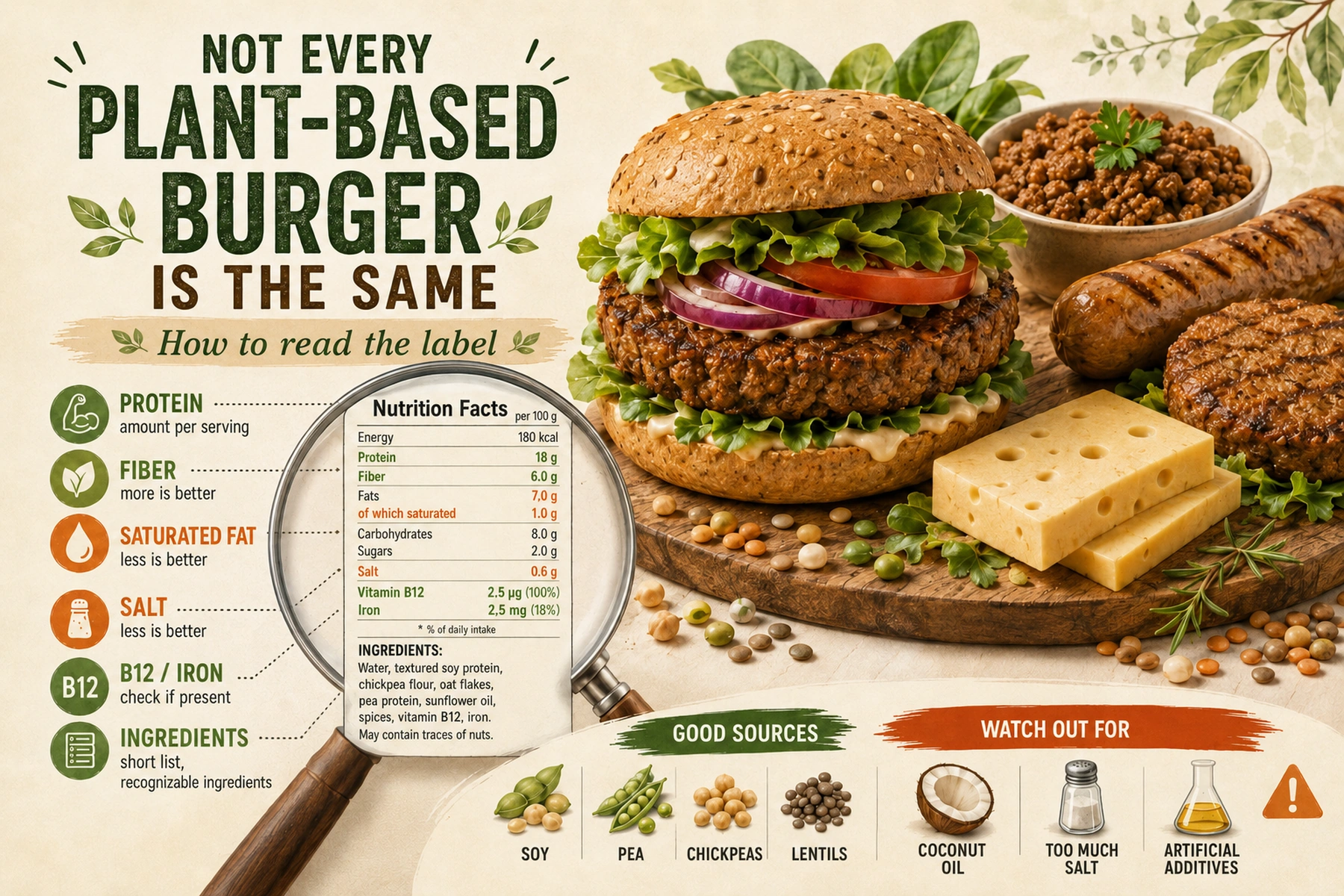
- “Plant-based” does not automatically mean “healthy”
- Plant-based substitutes can be useful transition foods
- Substitutes should not replace whole plant foods
- Many plant-based substitutes contain less saturated fat
- Not every plant-based product is low in saturated fat
- Fiber is one of the clearest advantages of plant-based substitutes
- A good substitute is one that brings more than just the absence of meat
- Plant-based substitutes contain no cholesterol and no heme iron
- Protein should be checked carefully
- Salt is one of the most common problems with plant-based substitutes
- More carbohydrates are not automatically a problem
- With regular use, B12, iron, zinc, and calcium need to be monitored
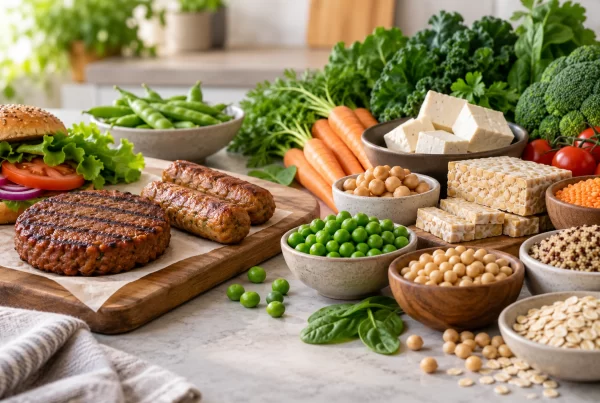
In recent years, plant-based meat substitutes have become much more accessible. We are no longer talking only about tofu, lentils, beans, or chickpeas, but also about burgers, mince, sausages, schnitzels, nuggets, salami, “chicken” fillets, and even plant-based cheeses.
People choose them for different reasons. Some want to reduce meat. Others are interested in cholesterol, saturated fat, the environment, or animals. Others are simply looking for something new, convenient, and easy to cook.
But here comes the important point:
“Plant-based” does not automatically mean “healthy.”
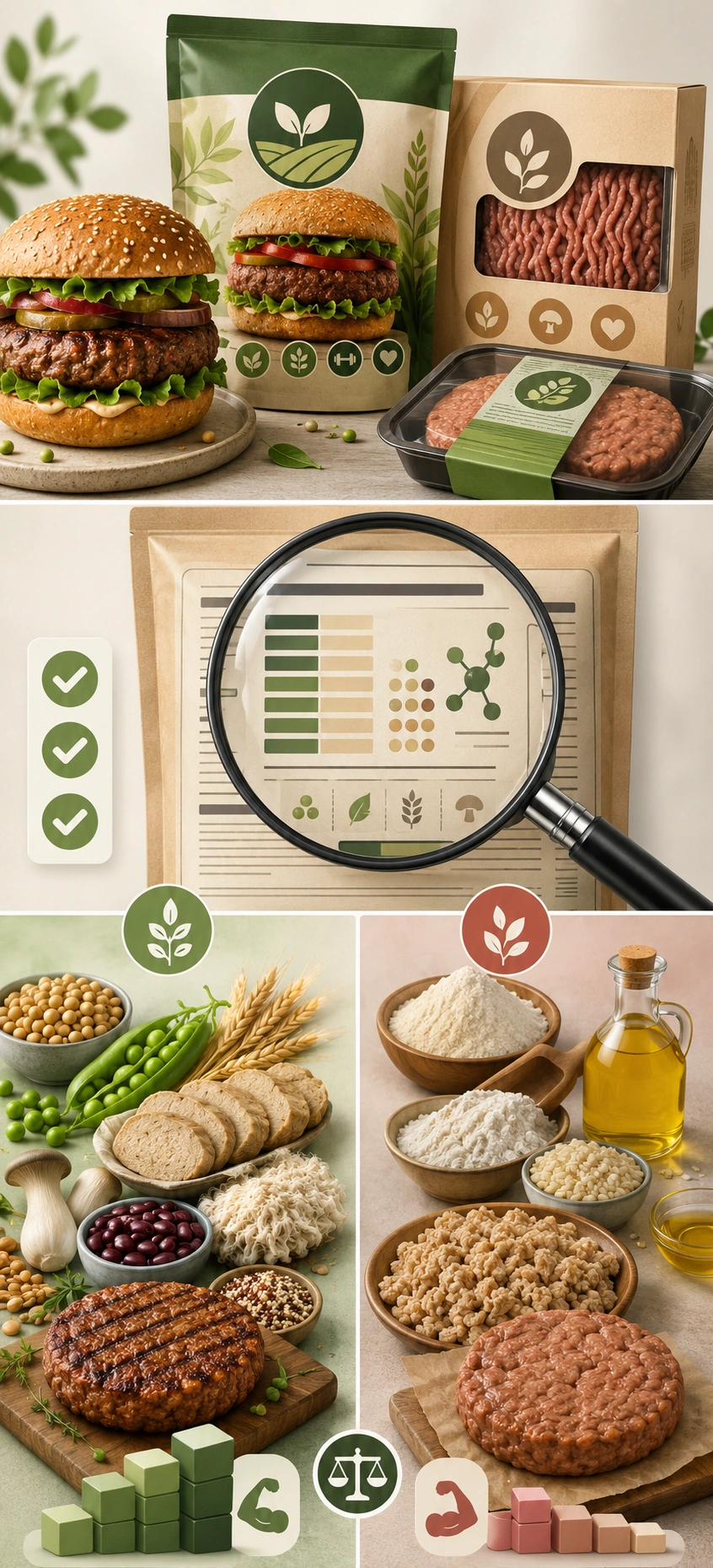
One plant-based burger can be a good choice — with a decent amount of protein, more fiber, less saturated fat, and a reasonable amount of salt.
Another can be mainly starch, coconut oil, salt, flavorings, and very little protein.
Both products can look almost identical on the shelf. Both may say “plant-based”, “vegan”, “meat-free”, or “100% plant-based”.
So the question is not only:
Is the product plant-based?
But rather:
What does it actually contain?
Why Meat Substitutes Can Be Useful
Before we start with the criticism, we need to say something important.
Plant-based meat substitutes are not pointless. They have a real practical role.
Not every person who wants to reduce meat is ready to start cooking lentils, beans, chickpeas, tofu, and tempeh every day from tomorrow. For many people, eating is a habit. It is connected to familiar dishes, taste, texture, convenience, and time. Also, not everyone has the time and knowledge to cook food that does not include meat.
That is why, for some people, the transition looks easier like this:
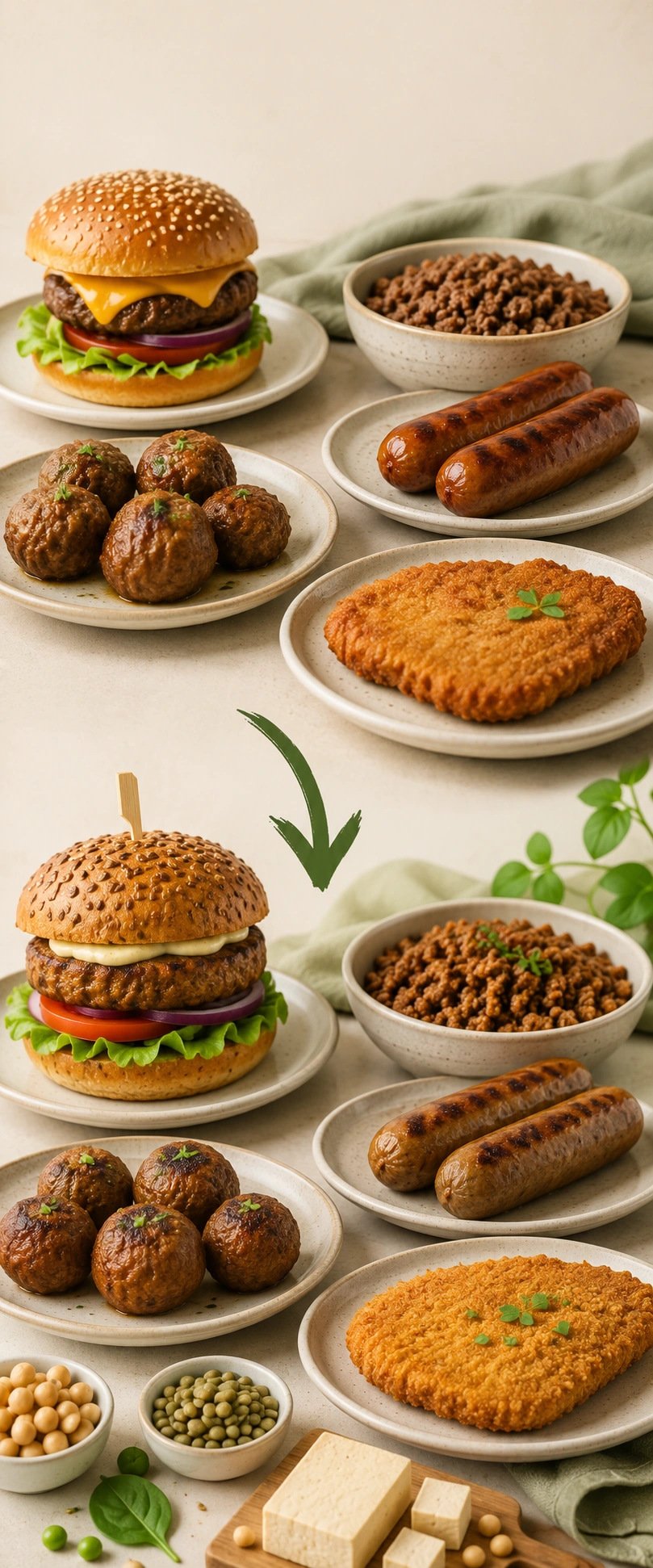
burger → plant-based burger
mince → plant-based mince
sausage → plant-based sausage
meatballs → plant-based meatballs
schnitzel → plant-based schnitzel
This does not mean that a plant-based burger is better than beans or lentils. In most cases, whole plant foods remain the better foundation of the diet.
But substitutes can be transition foods.
They can help a person reduce animal products without completely changing their way of eating from day one.
In other words:
The substitute should not replace beans. It should replace meat in the places where we would otherwise choose meat.
What Plant-Based Substitutes Often Do Better Than Meat
Scientific comparisons between meat products and plant-based substitutes show several commonly repeated advantages.
This does not apply to every product, but it appears often enough to be worth mentioning.
Less Saturated Fat
One of the strongest advantages of many plant-based substitutes is their lower saturated fat content.
This is especially clear when we compare them with red meat, processed meats, salami, sausages, and other fattier meat products.
In several market analyses, plant-based alternatives generally contain significantly less saturated fat than the animal products they imitate. This is important because a high intake of saturated fat is linked to increased LDL cholesterol in many people.
But there is a catch.
Not every plant-based product is low in saturated fat.
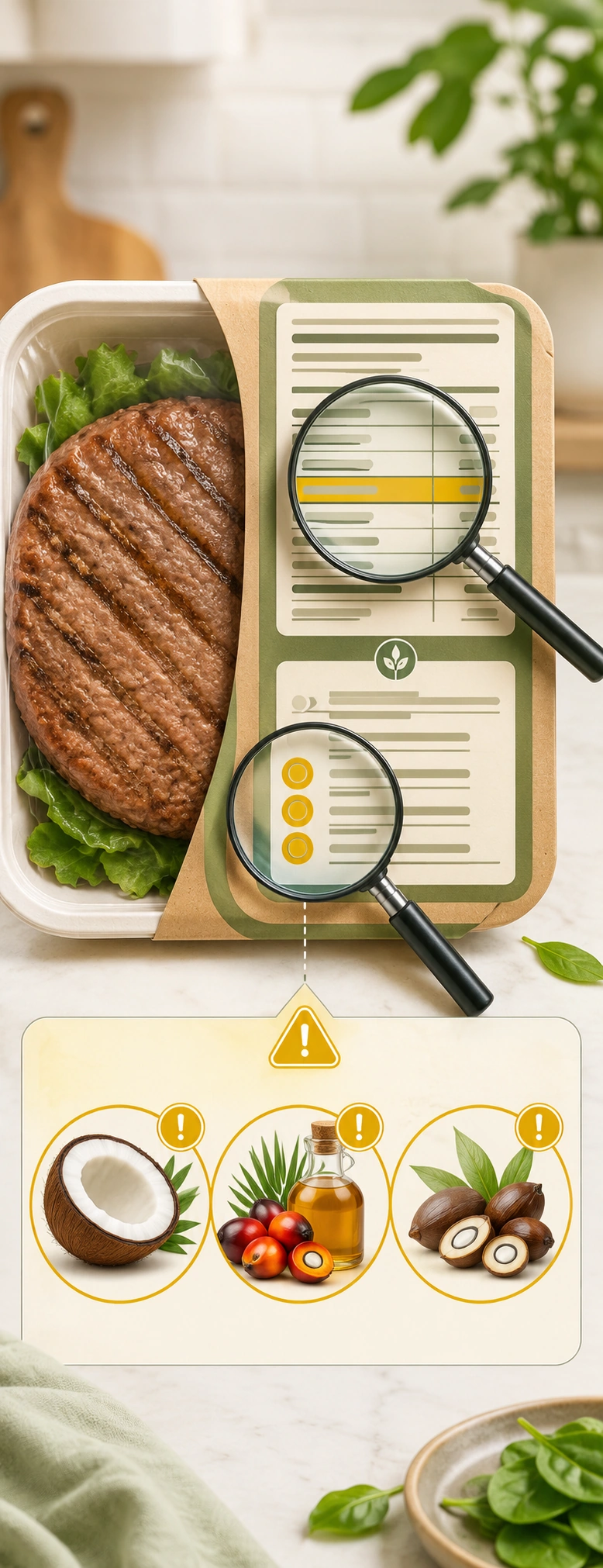
Some products use coconut oil, palm oil, or palm kernel oil to achieve a fattier, juicier, more “meaty” texture. This can sharply increase saturated fat.
That is why it is not enough to see the word “plant-based”.
We need to check the line:
saturated fat
And then check the ingredients for:
coconut oil
palm oil
palm kernel oil
If they are among the first ingredients, the product is not necessarily a good choice for regular use. In fact, it is worth thinking about how often you would consume it.
More Fiber
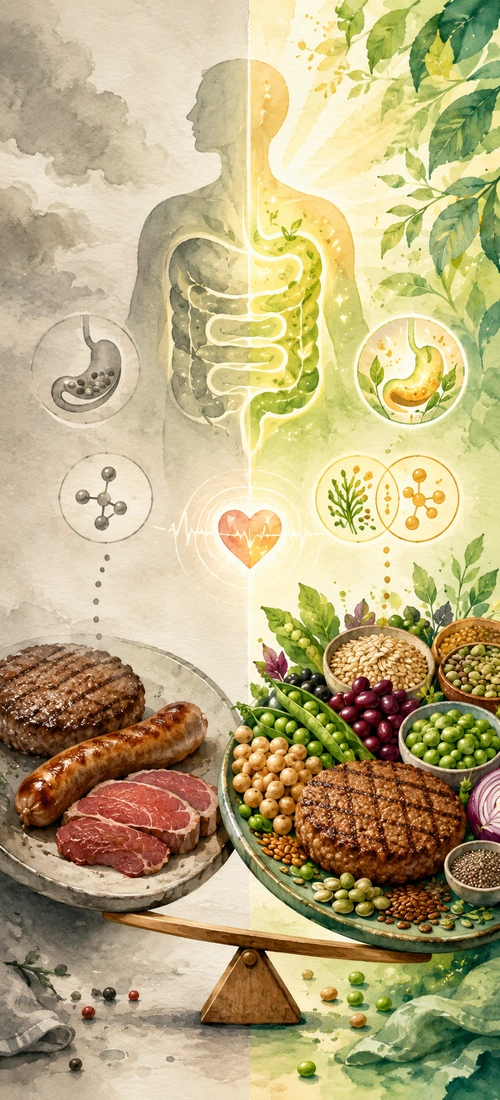
This is perhaps the clearest difference between meat and plant-based substitutes.
Meat contains no fiber.
Plant-based substitutes often contain some amount of fiber, especially when they are made from soy, peas, legume proteins, whole-grain ingredients, or added plant fibers.
In some comparisons, plant-based products contain around 3–5 g of fiber per 100 g of product. This may not sound like a huge amount, but it is a real difference, especially considering that meat contains 0 g.
Fiber is important for:
- gut health
- satiety
- blood sugar control
- lipid profile
- maintaining better LDL cholesterol
That is why a good plant-based substitute should not only be “meat-free”.
It is good when it brings something extra.
For example:
protein + fiber
That is already a more meaningful profile.
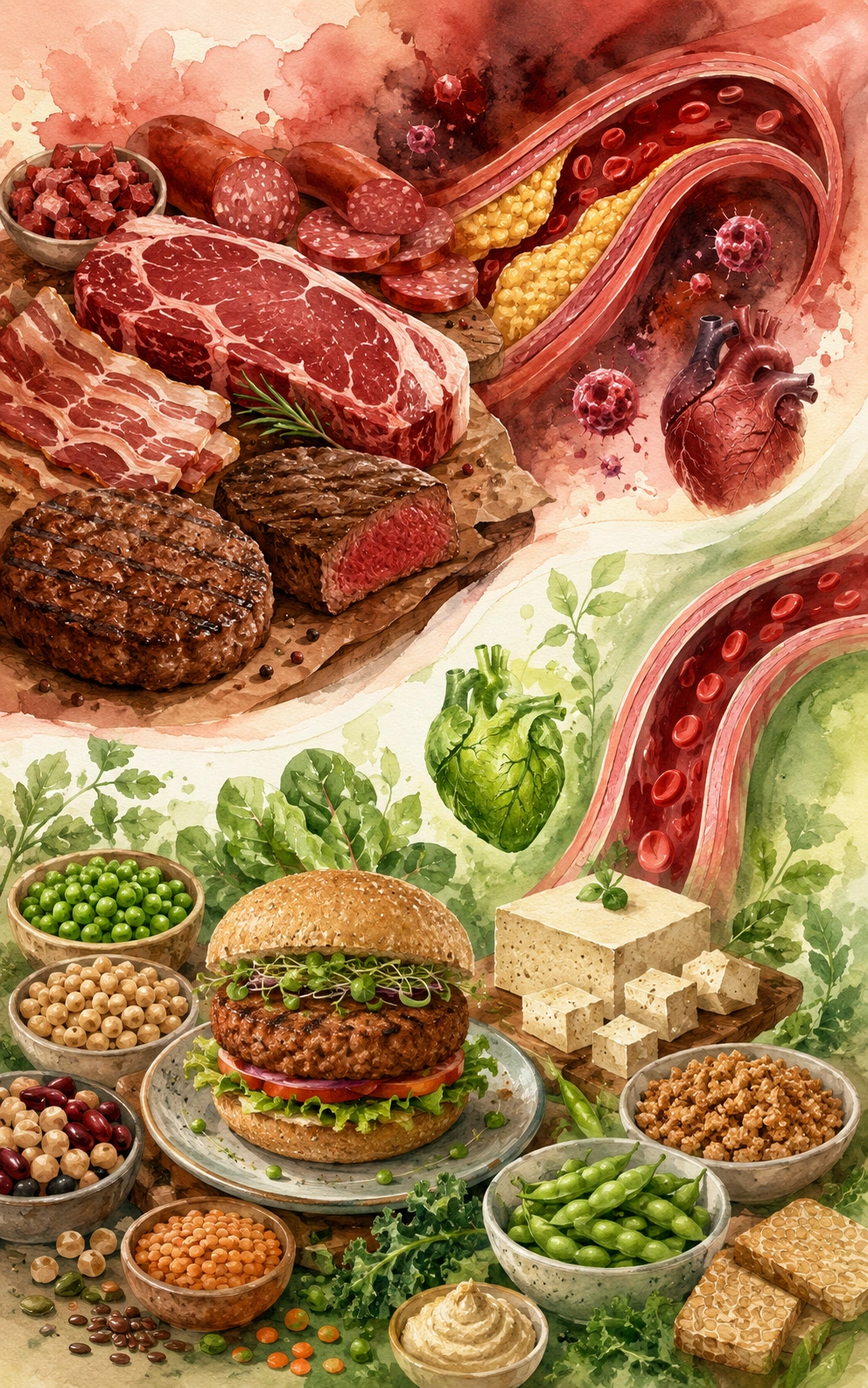
No Cholesterol and No Heme Iron
Plant-based substitutes do not contain dietary cholesterol, because cholesterol is found only in animal products.
They also do not contain heme iron — the form of iron found in meat, especially red meat.
This can be a plus in some contexts, especially for people who are trying to reduce their intake of red and processed meat, saturated fat, and dietary cholesterol.
Of course, this does not mean that iron is not important. On the contrary. If a person regularly replaces meat with plant-based products, they need to pay attention to whether they are getting enough iron, B12, and zinc.
But from the perspective of cholesterol and part of cardiovascular risk, the absence of cholesterol and heme iron can be an advantage.
Where We Need to Be Careful
Now comes the more important part.
Plant-based substitutes can have advantages, but not all of them are equally good.
Some are well formulated.
Others are simply processed products with good marketing.
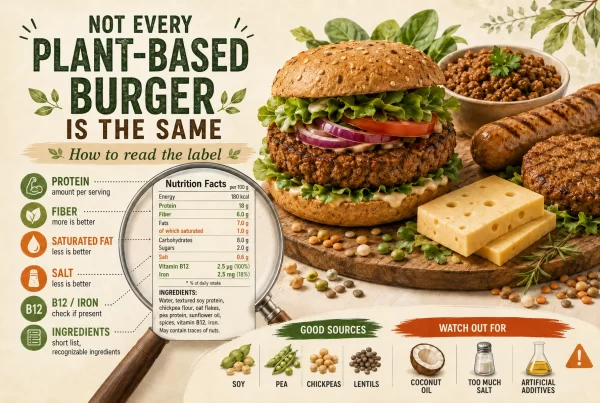
That is why the label matters.
Protein: Do Not Only Look at the Advertising on the Front
Many products have large claims that grab attention and create the impression of a very healthy food:
“High protein”
“Source of protein”
“Protein rich”
“High in protein”
But this does not always mean that the product is a good meat substitute.
The first thing we need to check is:
How many grams of protein does it contain per 100 g?
As a rough practical guide:
- under 8 g / 100 g — weak protein substitute
- around 10–12 g / 100 g — acceptable, but not impressive
- 12–15 g / 100 g — decent option
- 15+ g / 100 g — stronger choice
- 20+ g / 100 g — very good protein profile, if the other indicators are also good
Of course, this depends on the product. Not every food needs to be a protein bomb. But if the product claims to replace meat, protein matters.
The source of the protein also matters.
Better characteristics to look for in a product:
- soy protein
- pea protein
- mycoprotein
- wheat gluten / seitan
- a combination of legume and grain proteins
- soy + wheat
- pea + wheat
Weaker characteristics to watch for in a product:
- a lot of starch
- a lot of oil
- little real protein source
- a product that looks like meat but has only 4–6 g of protein per 100 g
Here it is important not to be misled by appearance.
A product may look like a burger, smell like a burger, and cook like a burger, but nutritionally it may be closer to a flavored mixture of starch, fat, and salt.
Salt: The Most Common Problem with Substitutes
Salt is one of the most common problems with plant-based meat substitutes.
Many of them are strongly flavored because they need to resemble the taste of meat, processed meat, sausage, or schnitzel. To achieve this, more salt is often used.
The problem is that a person can easily eat 150–200 g of such a product. If it contains a lot of salt, this is no longer a small detail.
As a rough guide:
- up to 1 g salt / 100 g — better option
- 1–1.5 g / 100 g — moderate, but not ideal
- over 1.5 g / 100 g — the product is already salty
- over 2 g / 100 g — red flag for regular use
Of course, context matters. If you eat such a product rarely, it is not a tragedy. But if you use it constantly as your main meat substitute, salt becomes important.
The most problematic products can be:
- plant-based processed meats
- salami
- bacon alternatives
- burgers
- ready-made meatballs
- breaded “chicken” products
- some fish alternatives
The conclusion is simple:
Plant-based does not mean low-salt.
Salt needs to be monitored.
Saturated Fat: Be Careful with Coconut Oil
Many plant-based substitutes have less saturated fat than meat. That is a plus.
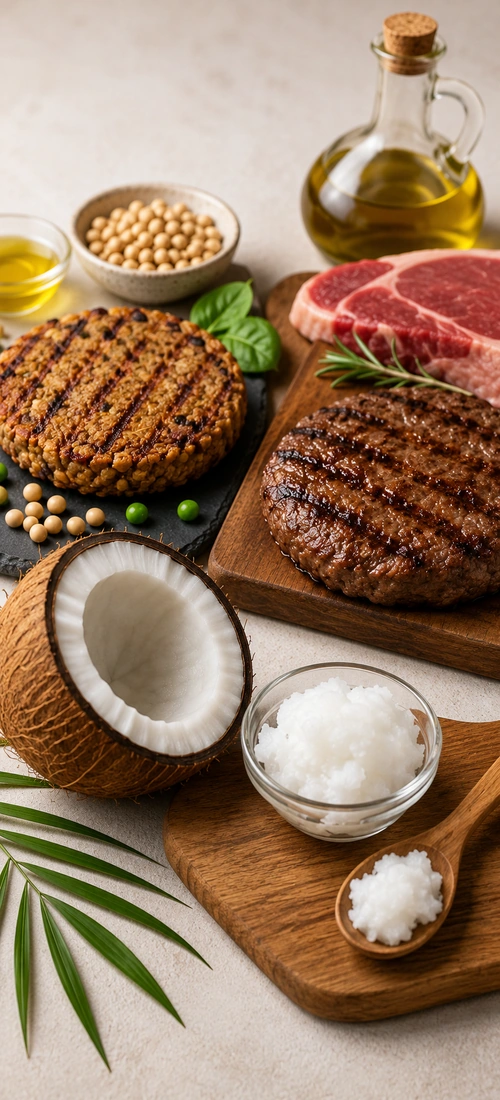
But some products compensate for the lack of animal fat with coconut oil.
Coconut oil sounds “natural”, but it is rich in saturated fat. That is why a product with a lot of coconut oil may have a weaker profile, especially if a person chooses it with the idea of reducing LDL cholesterol or overall saturated fat intake.
This is especially true for:
- plant-based cheeses
- juicy burgers
- some sausages
- some “premium” meat alternatives
- products that try to imitate the fatty texture of meat
What do we check?
First:
saturated fat per 100 g
Then:
the ingredients
If coconut oil or palm oil is among the first ingredients, the product may not be the best everyday choice.
Carbohydrates and Starches: Not Automatically a Problem, but They Matter
Plant-based substitutes almost always contain more carbohydrates than meat.
This is normal.
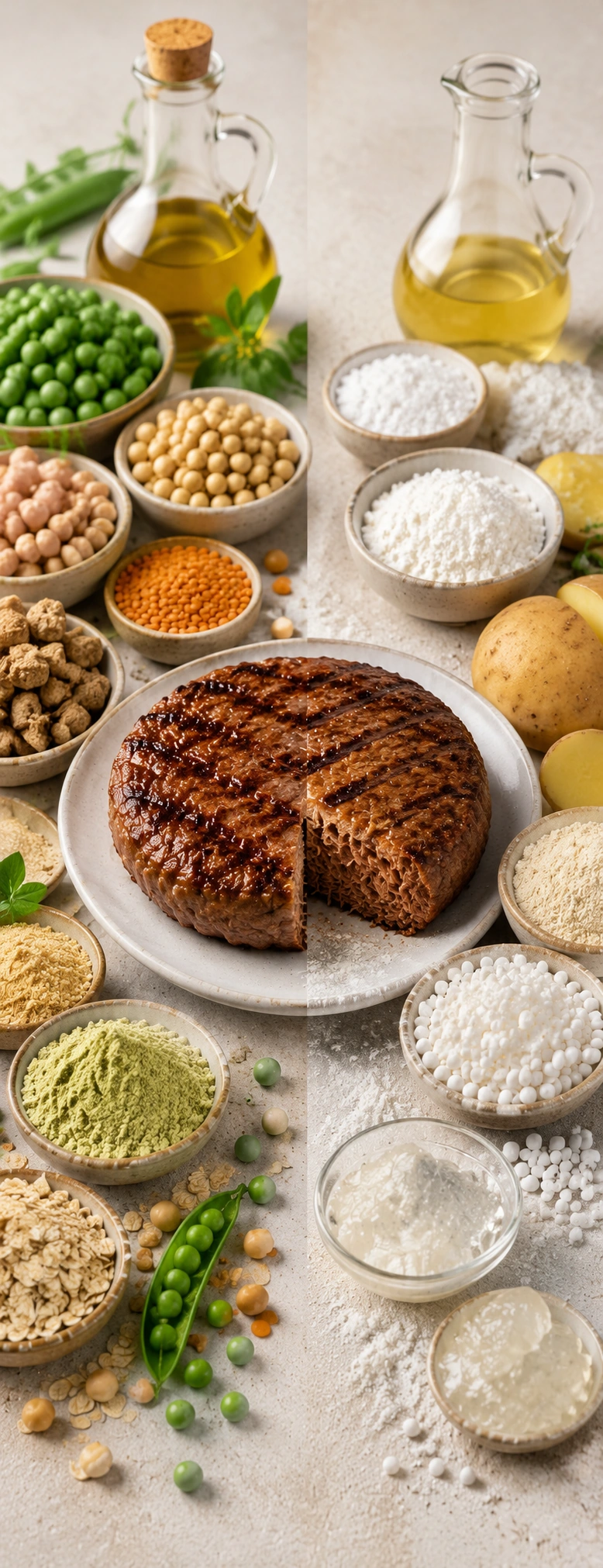
Meat practically contains no carbohydrates. Plant-based products often use:
- potato starch
- wheat flour
- rice flour
- tapioca
- oat fiber
- pea fiber
- methylcellulose
- different thickeners and stabilizers
These ingredients help with texture. They make the product firmer, juicier, easier to shape, and more meat-like.
That is why higher carbohydrates do not automatically mean the product is bad.
But there is an important difference.
If the product contains:
- enough protein
- good fiber
- low saturated fat
- a reasonable amount of salt
then the carbohydrates are not a major problem.
But if it contains:
- little protein
- a lot of starch
- a lot of fat
- a lot of salt
- almost no fiber
then we are dealing more with a processed imitation than a strong meat substitute.
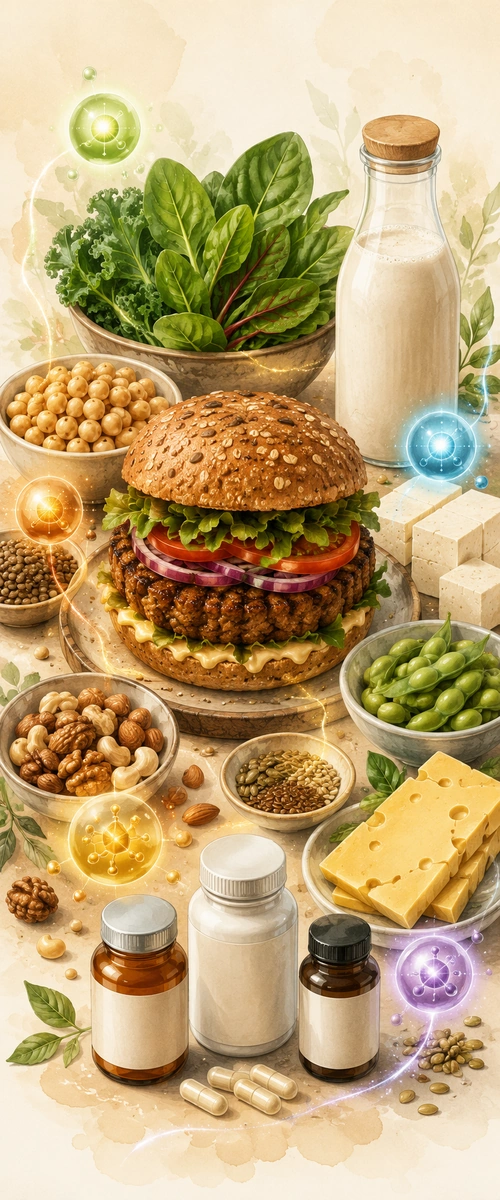
B12, Iron, Zinc, and Calcium: Important with Regular Use
If you eat a plant-based burger once a month, you do not need to analyze it like a medical report.
But if you regularly replace meat with plant-based substitutes, then micronutrients matter.
Meat is a source of:
- vitamin B12
- iron
- zinc
- high-quality protein
Plant-based substitutes do not always compensate for this.
Some are fortified.
Many are not.
In one of the reviewed studies of the German market, only a small portion of plant-based substitutes were fortified with important micronutrients such as B12 and iron.
That is why, if the product will be used often, it is good to check whether it contains:
- vitamin B12
- iron
- zinc
- calcium, especially in plant-based cheeses
- iodine, if available, although it is rarely added
There is another important detail here.
Iron from plant sources is not absorbed in the same way as heme iron from meat. This does not mean that a plant-based diet cannot provide iron. It can. But it requires more attention.
Especially for:
- women
- athletes
- people with low ferritin
- people who already have deficiencies
- children and teenagers
- older adults
For these groups, “meat-free” should not mean “plan-free”.
To avoid making this article too long, we decided to split it into two parts. You can read part two here.