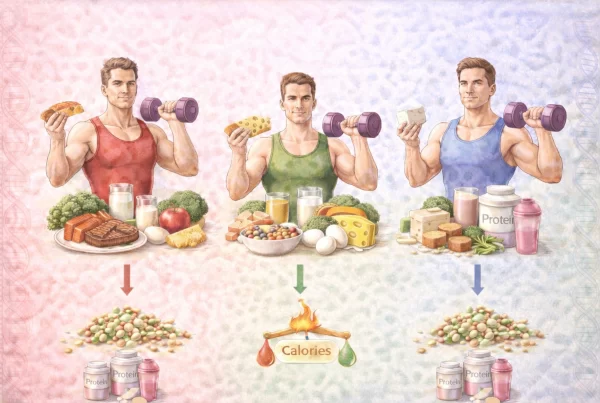

- Macronutrients can also be obtained without meat
- Protein requires more planning
- Plant-based diets provide more fiber
- Omnivores obtain B12 and iron more easily
- Vegetarian diets can be equivalent
- Protein quality depends on combinations
- Plant-based fats are more often unsaturated
- Omega-3 requires special attention
- Calories can be achieved in both diets
- Execution is more important than ideology
- Meat substitutes exist
- A well-planned diet covers the needs
Nowadays, one of the main reasons why people wonder whether reducing or stopping meat and/or dairy products is a good idea is the question of obtaining all necessary nutrients. Very often, this is a reasonable question, because meat contains quite a few substances that our body needs in the right amounts. Also, in many cultures, traditions, or simply marketing tricks aimed at different groups and societies, meat and meat products are presented as a fundamental element of the human diet. In this regard, we will compare the intake of the 4 main macronutrients that matter to us — protein, carbohydrates, fats, and fiber.
The main macronutrients we are all interested in are protein, fats, carbohydrates, and fiber. The most common question a person asks is: why should I stop eating meat when it gives me everything I need, and there is no way to obtain the same substances without it?
But is that really the case?
Protein
Let us start with protein — it is fundamental for our body because it builds the muscles that help us move, lift objects, and quite often boost our confidence when we look in the mirror. In addition, it performs many other tasks, helping the cells in our body communicate with one another.
When we consume protein, we do not use it directly in our body, because every animal species, including ours, builds and uses proteins unique to its own species from the amino acids it consumes. In fact, amino acids are the foundation of the house here. When protein is consumed, whether from meat, dairy products, or plants, our body breaks it down into amino acids and then begins to build human proteins, following instructions written in our DNA.
What are the differences?
Animal protein is quite close to human protein and usually contains all the necessary amino acids, because animals have already done the work of eating plants and combining their amino acids into proteins — something we can do just as well, although for various reasons we often prefer not to.
Plant protein is different — as much as we might wish otherwise, there is no plant that contains all amino acids, otherwise we would probably have cultivated it, genetically modified it, and planted half the planet with it. It is also often harder to absorb because it is contained within fiber-rich cell walls. As a result, we need to obtain plant protein from different types of plants, and the total quantity needs to be higher in order to consume the desired variety and amount of amino acids.
Example of common protein-rich foods and their potential substitutes:
Beef (100 g, ~26 g protein) | Lentils (200 g cooked) | Similar amount of protein, but also with fiber |
Chicken breast | Tofu/tempeh | Similar amount of protein per 100g |
Eggs | Chickpeas/soybeans | Similar amount of protein, but without cholesterol. |
Carbohydrates
As a rule, meat is poorer in carbohydrates than plants, and the reason for this is quite simple — plants are built from them — while animals, and humans as well, have muscles (not as much as most of us would like), bones, and collagen. Plants build their structure from carbohydrates — cellulose, hemicellulose, and pectin. In addition, they also use them for energy — starch and sugar, something we have also learned to do and enjoy very much.
Unlike them, animals and humans store energy in two ways — glycogen, which is stored in the liver, and fat. Since animals and plants have evolved differently — the former adapted for movement, and the latter for stability and immobility — in one case we have organisms adapted to building more protein and fat, and in the other case less protein, carbohydrates, and fiber, because they retain water, which helps them preserve the strength of their structure, something animals achieve with the minerals in their bones.


Fats
As we already mentioned, animals need to produce fat in order to store energy, which does not mean that plants contain no fat — they simply contain a different type of fat.
In animals, we can find saturated and monounsaturated fats, while in plants we find monounsaturated fats (olive oil, avocado) and polyunsaturated fats (nuts, seeds), or, in general, unsaturated fats. This is also the place to mention Omega-3 and Omega-6 fatty acids, which are needed for the functioning of the brain, eyes, immune system, and skin health.
Omega-3 is most commonly found in plants such as flaxseed, chia, walnuts, and leafy greens, while Omega-6 is found in seeds, nuts, grains, and seed oils. Meat can also contain these fatty acids, as long as the animal consumed them through the plants it ate, but humans and animals are not able to synthesize these acids on their own.
You can see a comparison of fats in animal and plant products here
Characteristics/type of fat | Animal origin | Race origin |
A key role in nature | Energy and insulation | Similar amount of protein per 100g |
Saturated fats | High content | Low content |
Monounsaturated | Medium-high content | Medium-high content |
Polyunsaturated | Low content | Low |
Essential fatty acids | Low content | High content |
Cholesterol | Present | Not present |
Thermal stability | High | Low |
Ideas
The most common question people ask on this topic is: what should I eat if I want to reduce or even stop eating meat
A sample day for a person who eats meat:
- Breakfast: eggs, toast, butter, fruit
- Lunch: chicken, rice or potatoes, vegetables
- Snack: yogurt, nuts
- Dinner: meat or fish, starch, vegetables
- Dessert/snack: chocolate, bread, or dairy products
- Actual macronutrients (realistic, not perfect)
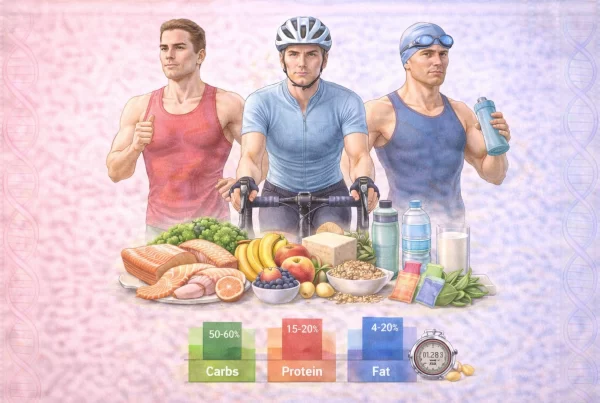
The average omnivorous man needs around 2500 kcal, which from the above-mentioned menu would be distributed as follows:
Macronutrients | Grams | Calories | % of calories needed |
Proteins | around 110 g | ~440 kcal | 18% |
Carbohydrates | around 300 g | ~1200 kcal | 48% |
Fats | around 95 g | ~860 kcal | 34% |
Fibre | ~25–30 g | -- |
|
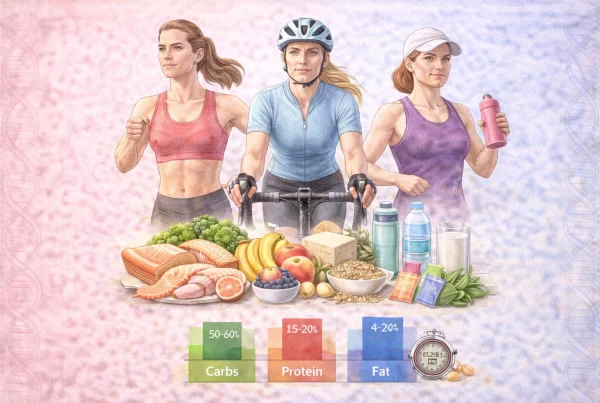
The average omnivorous woman needs around 2000 kcal, which from the above-mentioned menu would be distributed as follows:
Macronutrients | Grams | Calories | % of calories needed |
Proteins | around 85 g | around 340 kcal | 17% |
Carbohydrates | around 240 g | around 960 kcal | 48% |
Fats | around 78 g | around 700 kcal | 35% |
Fibre | around 22–25 g | -- |
|
Characteristics of omnivorous diets
- Complete protein without planning
- Higher saturated fat content
- Lower fiber content, but still sufficient
- Higher bioavailability of B12, iron, and zinc
Our goal is to achieve similar values with a vegetarian or vegan diet. Here is how this can happen:
A sample day for a person who does not eat meat:
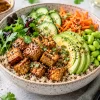
- Breakfast: oats, nuts, seeds, fruit
- Lunch: lentils or chickpeas, rice, olive oil, vegetables
- Extra: nuts, soy yogurt
- Dinner: tofu/tempeh, potatoes or pasta, vegetables
- Extra: dark chocolate or bread
Average vegetarian man (~2500 kcal)
Macronutrients | Grams | Calories | % of calories needed |
Proteins | around 100 g | around 400 kcal | 16% |
Carbohydrates | around 340 g | around 1360 kcal | 54% |
Fats | around 82 g | around 740 kcal | 30% |
Fibre | around 40–50 g | -- |
|
Average vegetarian woman (~2000 kcal)
Macronutrients | Grams | Calories | % of calories needed |
Proteins | around 75 g | around 300 kcal | 15% |
Carbohydrates | around 280 g | around 1120 kcal | 56% |
Fats | around 65 g | around 580 kcal | 29% |
Fibre | around 35–45 g | -- |
|
You can find a summarized comparison of the macronutrients in the table below
| Omnivorous | Vegetarians/vegans |
Calories | 2,500 | 2,500 |
Proteins | 110 g | 100 g |
Protein quality | High | Average (needs variety) |
Carbohydrates | 300 g | 340 g |
Fats | 95 g | 82 g |
Saturated fats | High | Ниско |
Fibre | 25–30 g | 40–50 g |
B12 | Found naturaly | I need to stock up if you're vegan, if you're vegetarian - eggs are an excellent source, of course from free-range chickens 🙂 |
Iron absorbtion | High | По-ниско |
Key biological conclusions
- Calories can easily be obtained in both types of diets.
- Protein can be the same in vegetarian diets, but they require planning with diverse foods in order to absorb the necessary amino acids.
- Fiber is dramatically higher in plant-based diets.
- Omnivores obtain more bioavailable micronutrients.
- Vegetarians achieve better gut health markers on average.
- Neither diet is “better” by default — execution is more important than ideology.
Types of meat and their nutritional equivalents
For the more curious readers, we will show what is contained in the main types of meat and how we can obtain the same or similar macronutrients through plant foods
Beef:
What beef provides (per 100 g cooked):
Protein: around 26 g
Fat: 10–20 g (higher content in fatty cuts)
Carbohydrates: 0 g
Calories: 250 kcal on average
Key nutrients
- Heme iron, which is highly bioavailable
- Zinc, high content
- Creatine, unique to meat
- Carnosine / carnitine
- B vitamins, especially B12
- Saturated and monounsaturated fats
How to combine vegetarian foods to obtain similar macronutrients
You need to match:
- Protein amount and amino acid profile
- Equivalents of iron, zinc, B12
- Caloric density, if necessary
Protein equivalents of 100 g beef (~26 g protein)
Vegetable source | Required amount | Notes |
Tofu | around 250 g | 26 g протеин |
Tempeh | around 140 g | 26 g protein, good source of iron |
Lentils (cooked) | around 350 g | Grains are needed for complete amino acids |
Seitan | around 120 g | Very high protein content |
Soybean mince | around 90–100 g dry | Closest match |
Micronutrient equivalents
Iron: lentils + spinach + vitamin C or eggs, preferably from free-range hens J
Zinc: pumpkin seeds, hemp seeds, chickpeas
B12: supplement or eggs, preferably from free-range hens J
Creatine: cannot be obtained from plants (supplement if necessary)
Pork (chops, minced meat, bacon in non-processed form)
What pork contains (per 100 g cooked)
Protein: ~25 g
Fat: 10–25 g (depending on the type of cut)
Calories: 250–320 kcal
Carbohydrates: 0 g
Key nutrients that distinguish pork
- Thiamine (B1) — pork is the number one animal source
- Complete protein
- Zinc and selenium
- Saturated + monounsaturated fats
Vegetarian equivalents of pork (~25 g protein)
Vegetable source | Required amount | Notes |
Tofu | around 240 - 250 g | Full profile |
Tempeh | around 140 g | Fermented, easier to digest |
Chickpeas | around 350 - 400 g | Rice is needed for complete amino acids |
Edamame | around 300 g | Very close to meat amino acids |
Seitan | around 110 g | Very high protein content |
Micronutrient equivalents:
Thiamine (very important)
Sunflower seeds
Flaxseeds
Whole grains
Beans and lentils
Zinc equivalent:
Chickpeas
Hemp seeds
Pumpkin seeds
Chicken (lean meat, breast, thighs)
What chicken contains (per 100 g cooked)
Protein: ~31 g (very high)
Fat: 3–10 g
Carbohydrates: 0 g
Calories: 165–210 kcal
Key nutrients in chicken
High protein content with low fat content
Niacin (B3)
Vitamin B6
Phosphorus and selenium
Very low calorie content per gram of protein
Vegetarian equivalents of chicken (~31 g protein)
Vegetable source | Required amount | Бележки |
Tempeh | around 160 g | 31 g protein |
Tofu (extra firm) | around 300 g | 31 g protein |
Seitan | around 130 g | Highest protein density |
Lentils (cooked) | around 420 g | Whole grains are necessary |
Soybean curls / TVP | about 110 g (dry) | Most similar texture for recipes |
Micronutrient equivalents
Vitamin B6: bananas, potatoes, chickpeas
Niacin: peanuts, mushrooms, whole grains
Selenium: Brazil nuts (1–2 nuts)
Fish (salmon)
What salmon provides (per 100 g cooked)
Protein: ~25 g
Fat: ~13 g
Calories: ~210 kcal
Carbohydrates: 0 g
What makes fish unique
- Omega-3 fatty acids (EPA and DHA) ← this is the key
- Complete protein
- Vitamin D
- Iodine and selenium
- Low saturated fat content
EPA and DHA are ready-to-use omega-3 fatty acids — the brain and heart use them directly.
Vegetarian equivalent (matched as closely as possible)
Protein match (~25 g)
Tempeh: around 140 g
Tofu: around 240 g
Seitan: around 120 g
Fat and omega-3 match (this is the difficult part)
Plants do NOT contain EPA/DHA. They contain only ALA, which converts very poorly.
To roughly estimate the omega-3 benefit of salmon:
Chia seeds: around 15 g
Ground flaxseed: around 15 g
Walnuts: around 30 g
Even then:
- ALA → EPA conversion ≈ 5%
- ALA → DHA conversion ≈ <1%
The true nutritional equivalent requires an algae-based DHA/EPA supplement
We hope this information will be useful if one day you try the unthinkable experiment on yourself — reducing or completely stopping meat consumption. We know it will not be easy, but we are keeping our fingers crossed and casting vegan spells for your success.
Sources:
https://higherlogicdownload.s3.amazonaws.com/THEACADEMY/859dd171-3982-43db-8535-56c4fdc42b51/UploadedImages/VN/Documents/Position-of-the-Academy-of-Nutrition-and-Dietetics-Vegetarian-Diets.pdf
https://pubmed.ncbi.nlm.nih.gov/8172124/
https://pmc.ncbi.nlm.nih.gov/articles/PMC3967195/
https://pmc.ncbi.nlm.nih.gov/articles/PMC9149309
https://www.cambridge.org/core/journals/proceedings-of-the-nutrition-society/article/plantbased-diets-a-review-of-the-definitions-and-nutritional-role-in-the-adult-diet/91C165CA3ABFAD9003AA42C1C0D49C89