
- Meat substitutes are not all the same.
- Many of them are processed, and some fall into the category of “ultra-processed” foods.
- This does not automatically mean that every such product is a bad choice.
- “Processed” is not the same as “unhealthy”.
- Tofu, tempeh, bread, pasta, frozen vegetables, and plant milks are also processed to different degrees.
- The problem begins when a product is high in salt, high in saturated fat, low in protein, low in fiber, and has a weak micronutrient profile.
- Some substitutes contain less saturated fat, more fiber, and no cholesterol.
- Others may contain too much salt, coconut oil, or additives.
- Meat is not always the “clean” alternative either — sausages, bacon, salami, hot dogs, and processed meat products are also processed.
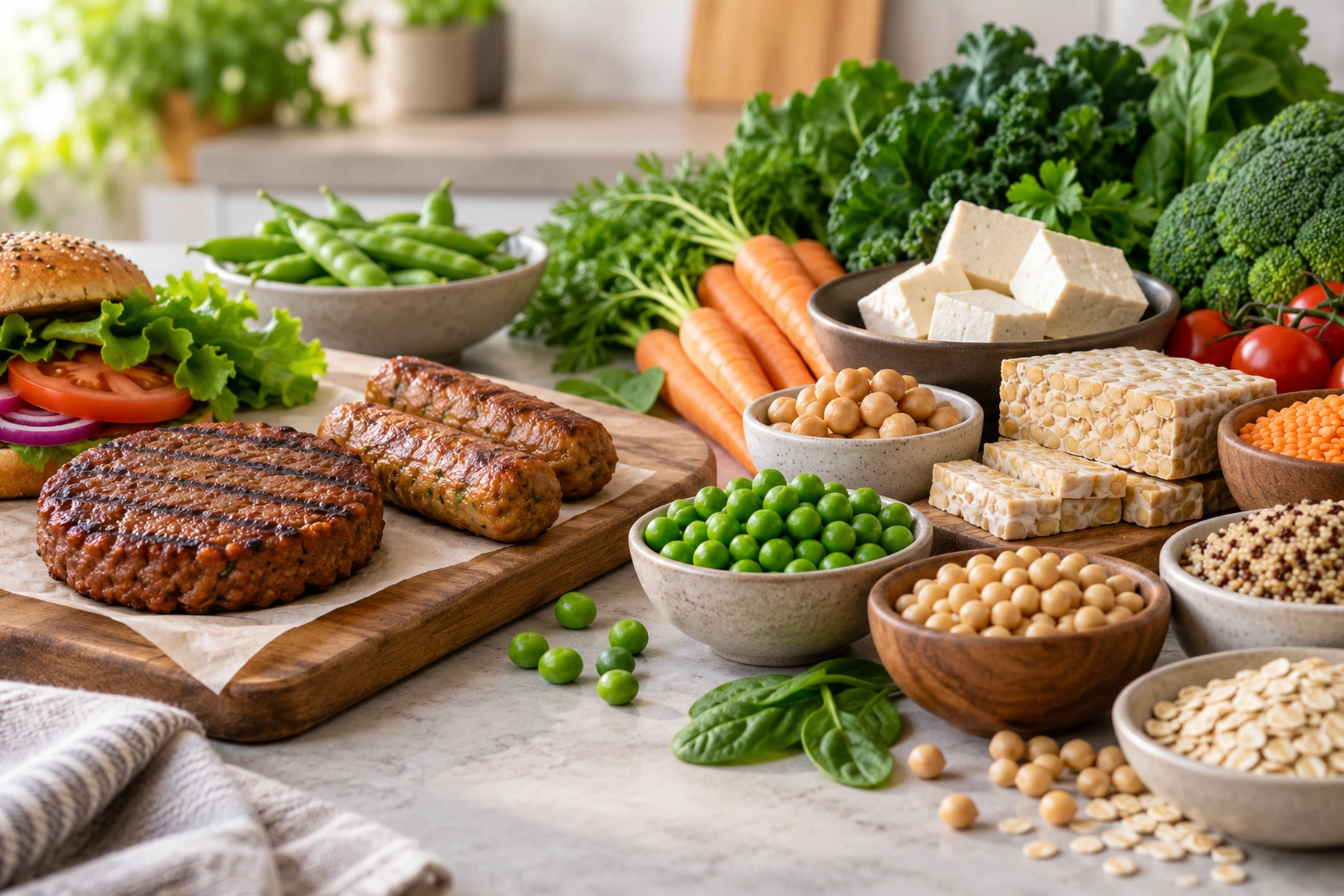
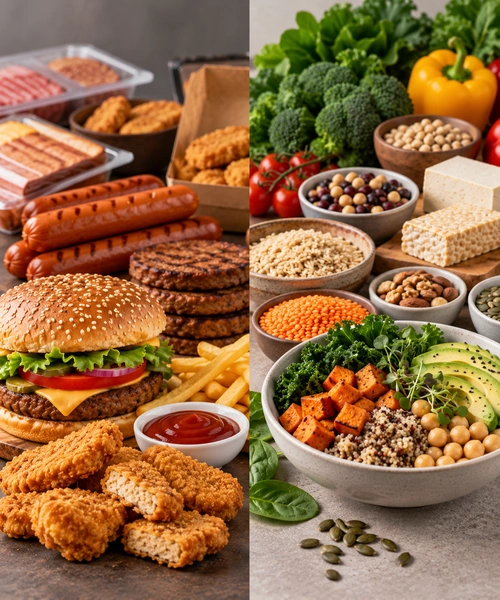
- The best foundation for a plant-based diet remains legumes, vegetables, whole grains, nuts, seeds, tofu, and tempeh.
- Substitutes can be a useful transition tool.
- The most reasonable approach is to read the label, not to judge only by the words “plant-based” or “processed”.
One of the most common arguments against meat substitutes is that they are “processed” or “ultra-processed”. This is an important question, but it is often used in an overly simplified way. Not every form of processing makes a food bad, just as not every plant-based alternative is automatically healthy. The more useful question is: what is in the specific product, what is its nutritional profile, and what does it replace in real-life eating?
Why does this question exist in the first place?
In recent years, meat substitutes have become much more popular. Stores now offer plant-based burgers, mince, meatballs, sausages, schnitzels, nuggets, fillets, and all kinds of products that try to resemble the taste, texture, and use of meat.
For some people, this is a convenient way to reduce meat without completely changing their habits. For others, it is a reason for skepticism.
The most common objection sounds like this:
“But these are not real foods. They are ultra-processed.”
This argument is not baseless. Many modern meat substitutes really are produced through industrial processes. They often contain isolated proteins, oils, starches, stabilizers, flavorings, colorings, or other technological ingredients.
But there is an important distinction here.
The fact that a product is processed does not tell us enough. We need to ask:
How was it processed?
What does it contain?
What is its nutritional profile?
How often do we eat it?
And what does it replace?
What does “processed food” actually mean?
Almost every food is processed to some degree.
When lentils are dried, rice is cleaned, oats are rolled, tomatoes are canned, soybeans are turned into tofu, and wheat is milled into flour, that is also processing.
Processing can have completely normal purposes:
- to make food safer;
- to extend its shelf life;
- to make it easier to cook;
- to improve texture;
- to make it more accessible;
- to reduce waste.
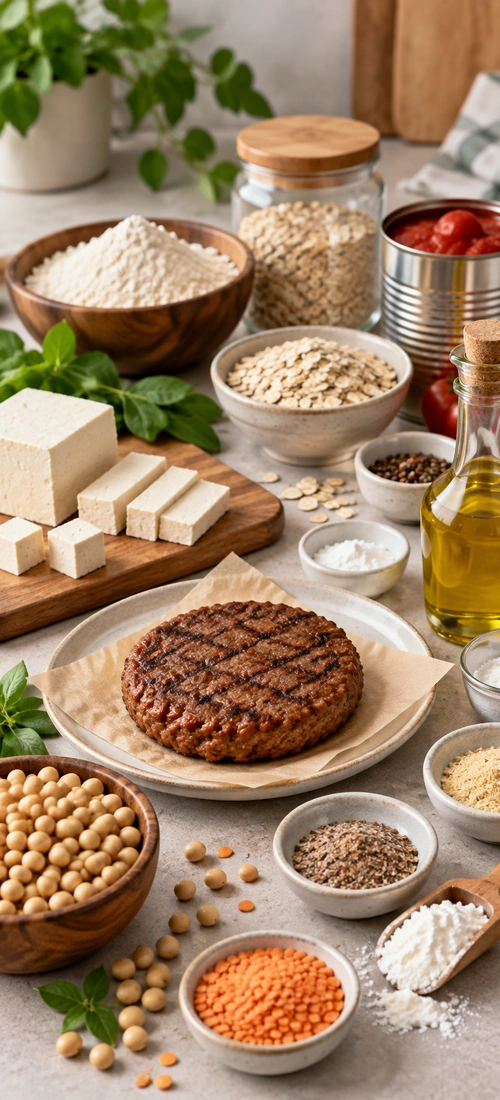
That is why the word “processed” by itself is not enough. It is more accurate to talk about the degree and purpose of processing.
The NOVA system classifies foods according to the degree and purpose of industrial processing. In it, ultra-processed foods are usually formulated from industrial ingredients and often contain additives used for flavor, color, texture, stability, or a stronger consumer effect.
What does “ultra-processed” mean?
According to NOVA, ultra-processed foods are not simply foods that have gone through some kind of process. They are often products created through a combination of extracted or modified ingredients — for example isolated proteins, refined oils, starches, emulsifiers, flavorings, colorings, and other additives.
This explains why many plant-based meat substitutes fall into this category. A plant-based burger may contain pea or soy protein, plant fats, starch, fibers, salt, flavorings, and colorings in order to come closer to the structure and taste of a meat burger.
This is a technological food.
But the question is whether that automatically makes it a bad choice.
The answer is: not always.
Why is “ultra-processed” not enough as a verdict?
There are good reasons to be cautious with ultra-processed foods in general. In many cases, they are energy-dense, low in fiber, high in salt, sugar, or unhealthy fats, and easy to overeat.
But the problem is that the category is very broad.
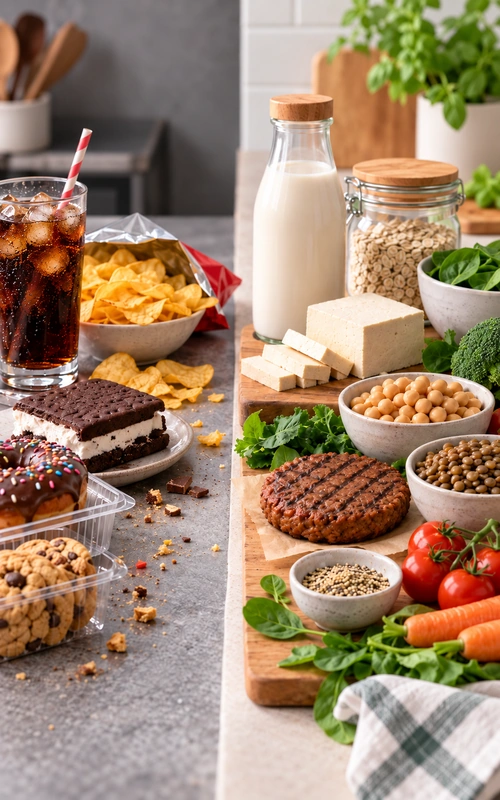
The same broad group can include sugary soft drinks, packaged desserts, chips, some ready meals, sweetened breakfast cereals, but also some plant milks, fortified products, protein foods, or meat substitutes.
This does not mean that all these products have the same effect on health.
This is where criticism of an overly simple use of NOVA comes in. Some authors point out that the system can be useful as a warning, but it is not nuanced enough to be the only criterion when choosing food — especially for plant-based substitutes that can help increase plant protein in the diet.
In other words:
“Ultra-processed” is a signal to look more carefully.
It is not an automatic verdict.
Yes, some meat substitutes have problems
Balance matters.
There is no need to present meat substitutes as perfect foods. They are not.
Scientific reviews show that the nutritional profile of plant-based meat alternatives can vary significantly. Some products are lower in calories, lower in saturated fat, higher in fiber, and free from cholesterol, while others may contain more salt, lower-quality protein, and less iron or vitamin B12.
A 2024 systematic review also reports a mixed picture: meat alternatives often have a lower total and saturated fat profile and more fiber, but they may contain more salt/sodium, more ingredients, more additives, and more potential allergens compared with meat.
That is why it is a mistake to say:
“It is plant-based, so it is healthy.”
It is not that simple.
But meat is also not always the “natural” alternative
When we criticize meat substitutes as processed, we often compare them with an idealized version of meat — for example fresh meat from an animal raised on a small farm.
But in real life, substitutes often replace other products:
- hot dogs;
- sausages;
- salami;
- bacon;
- frozen burgers;
- chicken nuggets;
- processed meat products;
- ready-made sandwiches;
- packaged meat products.
These are also processed foods.
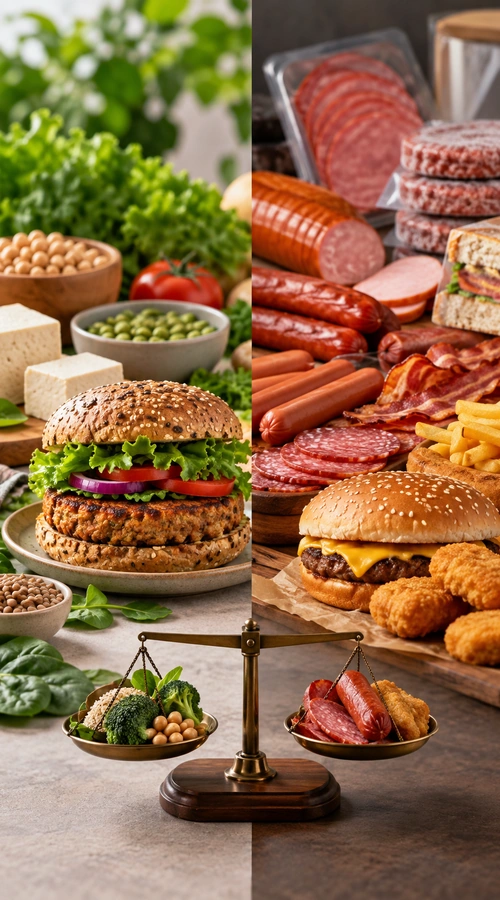
WHO defines processed meat as meat transformed through salting, curing, fermentation, smoking, or other processes to enhance flavor or improve preservation. Examples include hot dogs, ham, sausages, canned meat, and meat-based sauces.
This matters because the comparison needs to be fair.
We are not comparing a plant-based burger only with bean stew.
Sometimes we are comparing it with a meat burger, a hot dog, or salami.
And WHO/IARC classifies processed meat as carcinogenic to humans based on evidence of a link with colorectal cancer; the same document clarifies that this does not mean the risk is equal to the risk from smoking, but that the strength of the evidence for carcinogenicity is sufficient.
What does the research say about health effects?
The evidence on meat substitutes is still limited, especially when we talk about long-term effects.
There are short-term intervention studies that show potential benefits. For example, SWAP-MEAT compared periods of consuming plant-based meat alternatives and animal meat. During the plant-based phase, lower levels of TMAO, LDL cholesterol, and body weight were reported compared with the animal-meat phase.
A more recent systematic review and meta-analysis of randomized controlled trials also found that replacing meat with plant-based meat alternatives for periods of 1 to 8 weeks was associated with reductions in LDL cholesterol, total cholesterol, and body weight.
But this does not mean the question is settled.
These research areas are still limited by a small number of studies, short duration, and different products. One substitute made with pea protein, low saturated fat, and moderate salt is not the same as another substitute with a lot of coconut oil, high salt, and almost no fiber.
That is why the fairest conclusion is:
Some substitutes can be a better choice than some meat products.
But not all substitutes are automatically a good choice.
And what does the evidence say about plant-based foods in general?
It is important to distinguish between two things:
plant-based eating
and
plant-based meat substitutes
They are not the same thing.
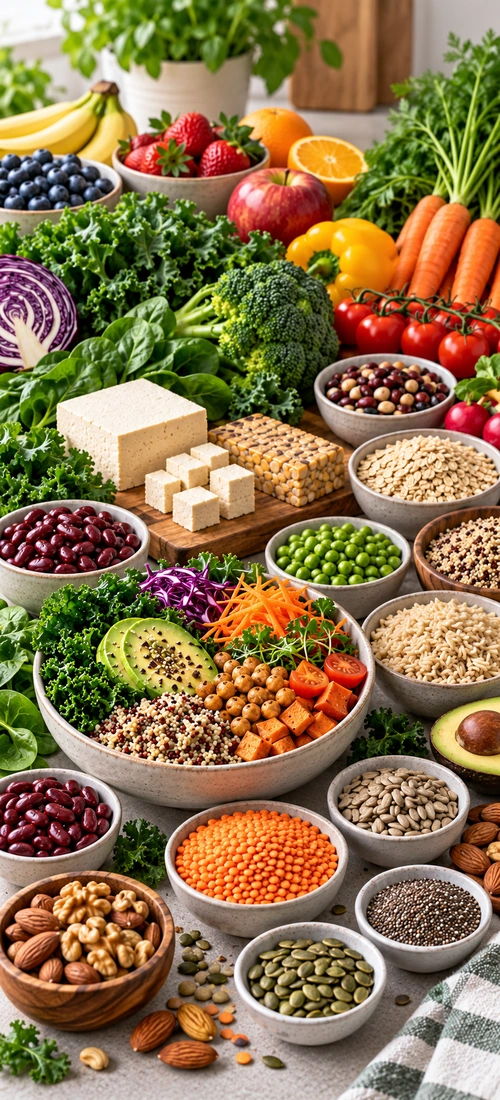
Plant-based eating can be based on beans, lentils, chickpeas, peas, whole grains, vegetables, fruits, nuts, seeds, tofu, and tempeh.
Meat substitutes are only one small part of this picture.
Broader data on replacing animal-based foods with plant-based foods point to an association with a lower risk of cardiovascular disease, type 2 diabetes, and all-cause mortality in prospective studies, but these data refer to plant-based foods as a whole, not only to plant-based burgers and sausages.
This is key.
If someone replaces processed meats with lentils, beans, tofu, and vegetables — that is one thing.
If they replace processed meats with plant-based hot dogs every day — that is another.
And if they add plant-based burgers on top of an already unbalanced diet — that is a third thing.
Context matters.
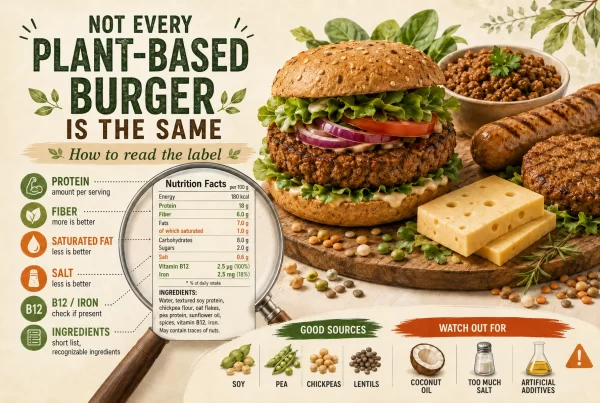
What matters on the label?
Instead of looking only at whether a product is “plant-based” or “ultra-processed”, it is more useful to look at the specific label.
The most important things are:
Protein
It is good for a substitute to contain a meaningful amount of protein, especially if it really replaces meat in the diet. Products based on soy, pea, wheat, or mycoprotein often have higher protein content than products made mainly from starch, oils, or vegetable fillers.
Saturated fat
Some substitutes use coconut or palm oil to achieve a texture closer to meat. This can increase the saturated fat content. If the goal is a better cardiovascular profile, this matters.
Salt
Salt is one of the most common issues with ready-made substitutes. If a product is very salty, it does not automatically become “healthy” just because it is plant-based.
Fiber
One advantage of plant-based foods is that they can contain fiber. But not every substitute contains a lot of fiber. If the product contains legumes, vegetables, fibers, or whole plant ingredients, that is a plus.
Iron, B12, and zinc
Meat contains some nutrients that are not always present in substitutes. If someone often relies on plant-based alternatives, it makes sense to check whether they are fortified with vitamin B12, iron, or zinc — especially in a fully plant-based diet.
Ingredient list
A short list does not always mean a better product, but an overly long list with a lot of salt, fats, flavorings, and technological additives is a sign to look more carefully.
When are meat substitutes useful?
Substitutes can play a useful role in several situations.
First, when they help someone reduce meat without feeling like they are giving up everything familiar. Habits matter. If someone is used to burgers, meatballs, or pasta with mince, a plant-based substitute can make the transition easier.
Second, when they replace highly processed meat products. If the choice is between a plant-based alternative with a good profile and regular consumption of hot dogs, salami, or bacon, the comparison is not as simple as “real food versus artificial food”.
Third, when they are part of a broader diet that includes legumes, vegetables, whole grains, nuts, seeds, and minimally processed products.
Then the substitute is not the foundation of the diet.
It is a convenient tool.
When are substitutes not a good choice?
Substitutes are not a particularly good choice when they become the foundation of the diet.
If someone relies mainly every day on plant-based burgers, plant-based sausages, plant-based nuggets, plant-based schnitzels, and ready-made products, that is not the ideal version of plant-based eating.
We should also be careful with products that are:
- high in salt;
- high in saturated fat;
- low in protein;
- without fiber;
- without useful micronutrients;
- made mainly from starch, fat, and flavorings;
- marketed as “healthy” without the label supporting that claim.
This does not mean they should never be eaten.
It means we should not confuse them with beans, lentils, chickpeas, tofu, tempeh, or whole plant-based meals.
The fairest position
Meat substitutes are not magic.
They are not mandatory.
They are not always healthy.
And they are not automatically harmful.
They are a category of products with major differences between individual options.
Some are well formulated — with good protein, low saturated fat, moderate salt, fiber, and fortification with important nutrients.
Others are simply a plant-based version of junk food.
That is why it does not make sense to ask:
“Are meat substitutes good?”
The better question is:
“Which substitute, with what composition, how often, in what diet, and instead of what?”
A practical guide
If you want a simple way to assess a product, ask yourself these questions:
Does it contain enough protein?
How much saturated fat does it contain?
How much salt does it contain?
Does it contain fiber?
Does it contain iron, B12, or zinc if I will use it often?
Is the main ingredient a legume, soy, pea, wheat, or mycoprotein — or mainly starch and fat?
What am I replacing with it — steak, a hot dog, salami, a burger, bean stew, or a home-cooked meal?
How often will I eat it?
These questions are more useful than a single word like “processed”.
Conclusion
Meat substitutes should not be presented as perfect foods.
But it is also not fair to reject them only because they are processed.
Yes, some of them are ultra-processed.
Yes, some contain too much salt, saturated fat, or additives.
Yes, they cannot replace the need for a balanced diet.
At the same time, some of them can help people reduce their meat consumption, especially processed meat products, without making the transition feel too difficult.
The best foundation remains simple:
- more legumes;
- more vegetables;
- more whole grains;
- nuts and seeds;
- tofu and tempeh;
- fewer highly processed products — whether animal-based or plant-based.
Meat substitutes can have a place in this picture.
Not as proof that plant-based eating is perfect.
Not as an excuse not to read labels.
But as a tool.
Sometimes convenient.
Sometimes useful.
Sometimes not particularly good.
It depends on the product.
And that is exactly why the most reasonable approach is neither blind trust nor automatic rejection.
But attention to composition, context, and the real alternative.
Sources:
https://www.cambridge.org/core/journals/public-health-nutrition/article/ultraprocessed-foods-what-they-are-and-how-to-identify-them/E6D744D714B1FF09D5BCA3E74D53A185
https://www.sciencedirect.com/science/article/pii/S0963996924002540
https://www.sciencedirect.com/science/article/pii/S0924224424001596
https://pmc.ncbi.nlm.nih.gov/articles/PMC9914738/
https://pubmed.ncbi.nlm.nih.gov/32780794/
https://www.sciencedirect.com/science/article/pii/S000291652401428X
https://www.who.int/news-room/questions-and-answers/item/cancer-carcinogenicity-of-the-consumption-of-red-meat-and-processed-meat/
https://link.springer.com/article/10.1186/S12916-023-03093-1