
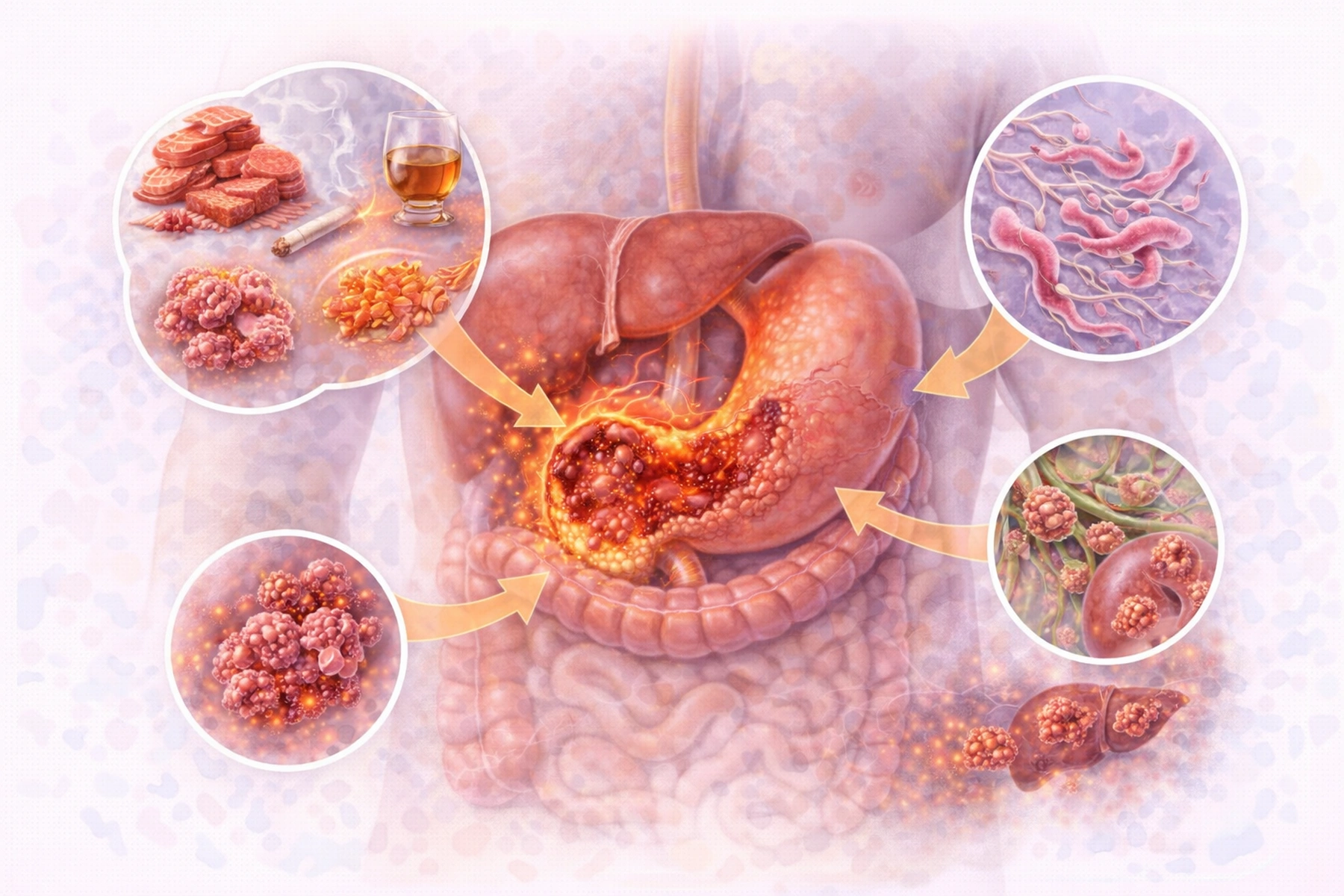
- H. pylori is a leading risk factor
- Stomach cancer develops slowly
- Processed meat increases the risk
- Nitrosamines damage the stomach lining
- Salt strengthens the carcinogenic effect
- Smoking and high temperature create risk
- HCAs and PAHs contribute to damage
- Red meat also requires limitation
- Fruits and vegetables have a protective effect
- Vitamin C suppresses nitrosamines
- Testing for H. pylori is important
- Prevention strongly depends on nutrition
Even if a person lives well, at some point they have to leave this world. There is probably no particularly pleasant way for this to happen, but there are certainly many unpleasant ones, and cancer is definitely one of them. Unfortunately, there are many different types of cancer, and they develop as a result of different causes. In this article, we will look at stomach cancer.
We will examine what it is, why and how it occurs, how nutrition affects it, and what we can do to reduce the chances of developing this disease.
What is stomach cancer?
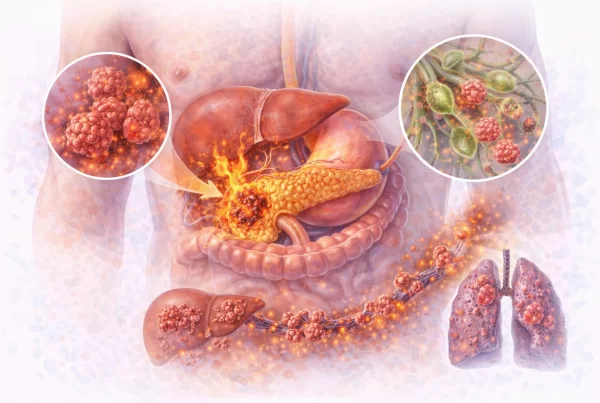
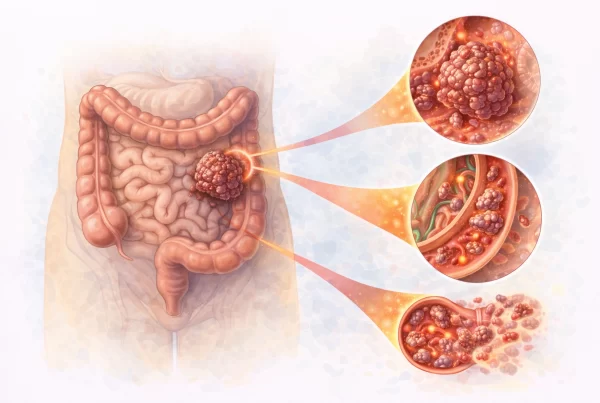
Stomach cancer is a malignant disease that forms in the lining of the stomach, most often starting from the glandular cells (adenocarcinoma).
The cancer usually develops slowly over many years through a step-by-step process:
- Chronic inflammation
- Atrophic gastritis
- Intestinal metaplasia
- Dysplasia
And finally, congratulations, we win stomach cancer.
The two main types are:
- Non-cardia stomach cancer (the most common; linked to diet, infections, and environment)
- Cardia stomach cancer (more strongly linked to obesity, reflux, and a Western diet)
Causes and main risk factors
Stomach cancer is influenced by a combination of infections, diet, environment, and genetics.
A) Most important risk factor: Helicobacter pylori
- Chronic H. pylori infection causes long-term inflammation of the stomach lining.
- It leads to atrophy, DNA damage, and a higher mutation rate.
B) Dietary factors
What increases the risk of developing stomach cancer:
- Processed meat
- Excess salt / salt-preserved foods
- Smoked meats
- Grilled / charred foods
- Low fruit and vegetable intake
Protection:
- High consumption of fresh fruits/vegetables
- Antioxidants, polyphenols, vitamin C
C) Lifestyle and medical factors
- Smoking (strong effect)
- Alcohol (moderate effect)
- Obesity (especially cardia cancer)
- Family history
- Long-term reflux (in cardia cancer)
How does meat consumption affect stomach cancer risk?
The evidence is weaker than for colon cancer, but it is still notable — especially for processed meats, which show consistent associations in meta-analyses.
The main mechanisms are linked to nitrites/nitrates, nitrosamines, high salt content, and carcinogenic by-products from cooking.
Mechanism 1
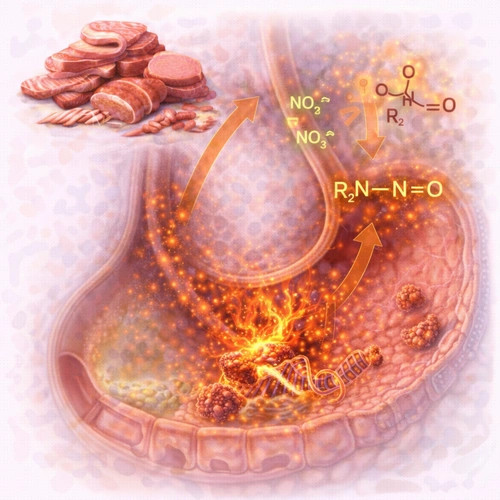
Nitrites/Nitrates → Nitrosamines
Processed meats (salami, bacon, sausages, ham) contain nitrites and nitrates used for preservation.
In the acidic stomach — not that it is sour, it simply has low pH:
- Nitrites → form nitrosamines, which are strong carcinogens.
- These compounds directly damage DNA in stomach epithelial cells.
Nitrosamines are one of the clearest mechanistic links between processed meat and stomach carcinogenesis.

Mechanism 2
Salt + processed meat damage the stomach lining
Many processed meats contain high amounts of sodium.
Salt:
- Weakens the stomach’s mucous barrier
- Makes the lining more vulnerable to carcinogens
- Increases the ability of H. pylori to cause inflammation
Salt + nitrites = a synergistic, damaging environment for stomach tissue.
Mechanism 3
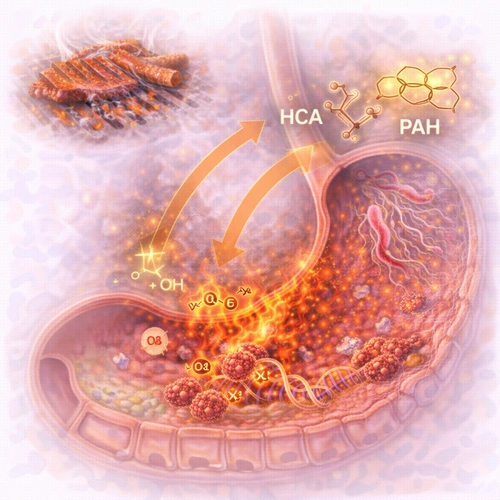
HCAs and PAHs from roasted/smoked meats
Cooking and smoking meats produce:
- Heterocyclic amines (HCAs)
- Polycyclic aromatic hydrocarbons (PAHs)
These compounds reach the stomach and cause:
- Formation of DNA adducts (direct mutations)
- Oxidative stress
- Increased stomach inflammation
Smoked and charcoal-grilled meats are especially rich in PAHs.

Mechanism 4
Processed meats worsen the damage caused by H. pylori
Chronic H. pylori infection already inflames the stomach.
Processed meat compounds:
- Intensify inflammation
- Increase gastric atrophy
- Promote DNA-damaging reactions in already inflamed cells
This combination significantly increases the risk.
Prevention and risk reduction
A) Reduce or eliminate processed meats – of course we will say that.
This is the most effective step. Processed meats consistently show a stronger association with stomach cancer than fresh red meat.
B) Reduce total red meat intake
Limit it to 350–500 g/week cooked; less is better for risk reduction.
C) Choose less harmful cooking methods
Use:
- Stewing
- Boiling
- Baking
- Light grilling (avoid charring)
Avoid:
- Smoking
- High-temperature frying
- Blackened or charred crusts
D) Reduce salt intake
Too much salt directly damages stomach cells and increases the carcinogenic activity of H. pylori.
E) Increase fruits and vegetables
Vitamin C and polyphenols block nitrosamine formation.
The most beneficial foods:
- Citrus fruits
- Fruits
- Leafy greens
- Broccoli and cruciferous vegetables
- Tomatoes
- Green tea
F) Testing and treatment for Helicobacter pylori
One of the strongest prevention strategies.
Treating H. pylori reduces stomach cancer risk by 40–50%.
G) Maintain a healthy weight
Especially important for cardia stomach cancer, which is linked to obesity and reflux.
Brief summary of what was written in the article:
What is stomach cancer?
Stomach cancer is a malignant disease of the stomach lining that usually develops slowly after chronic inflammation, infection, and exposure to environmental factors.
How does meat contribute?
Processed meats increase stomach cancer risk through nitrosamines, salt damage, and carcinogens formed during smoking or grilling. These compounds damage stomach cells, intensify H. pylori inflammation, and cause DNA damage.
How can we prevent it?
Avoid processed meat, limit red meat, reduce salt, use safer cooking methods, consume foods high in antioxidants, maintain healthy lifestyle habits, and get screened/tested for H. pylori.