
- Pancreatic cancer is very aggressive
- Processed meat increases the risk the most
- Red meat also contributes
- Nitrosamines damage pancreatic DNA
- High-temperature cooking creates carcinogens
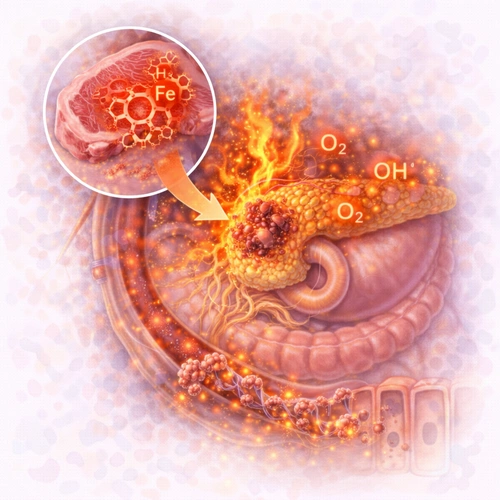
- Heme iron increases oxidative stress
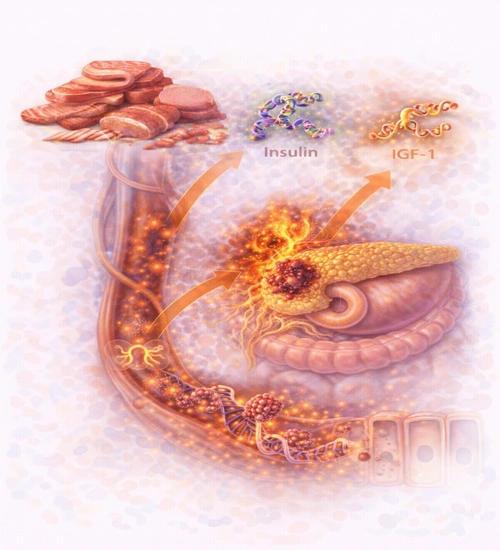
- Insulin and IGF-1 support tumor growth
- Obesity and diabetes increase the risk
- Fruits and vegetables have a protective role
- Weight control is important
- Smoking is a key risk factor
- Prevention starts with nutrition and habits
Even if a person lives well, at some point they have to leave this world. There is probably no particularly pleasant way for this to happen, but there are certainly many unpleasant ones, and cancer is definitely one of them. Unfortunately, there are many different types of cancer, and they develop as a result of different causes. In this article, we will look at pancreatic cancer. We will examine what it is, why and how it occurs, how nutrition affects it, and what we can do to reduce the chances of developing this disease.
What is pancreatic cancer?
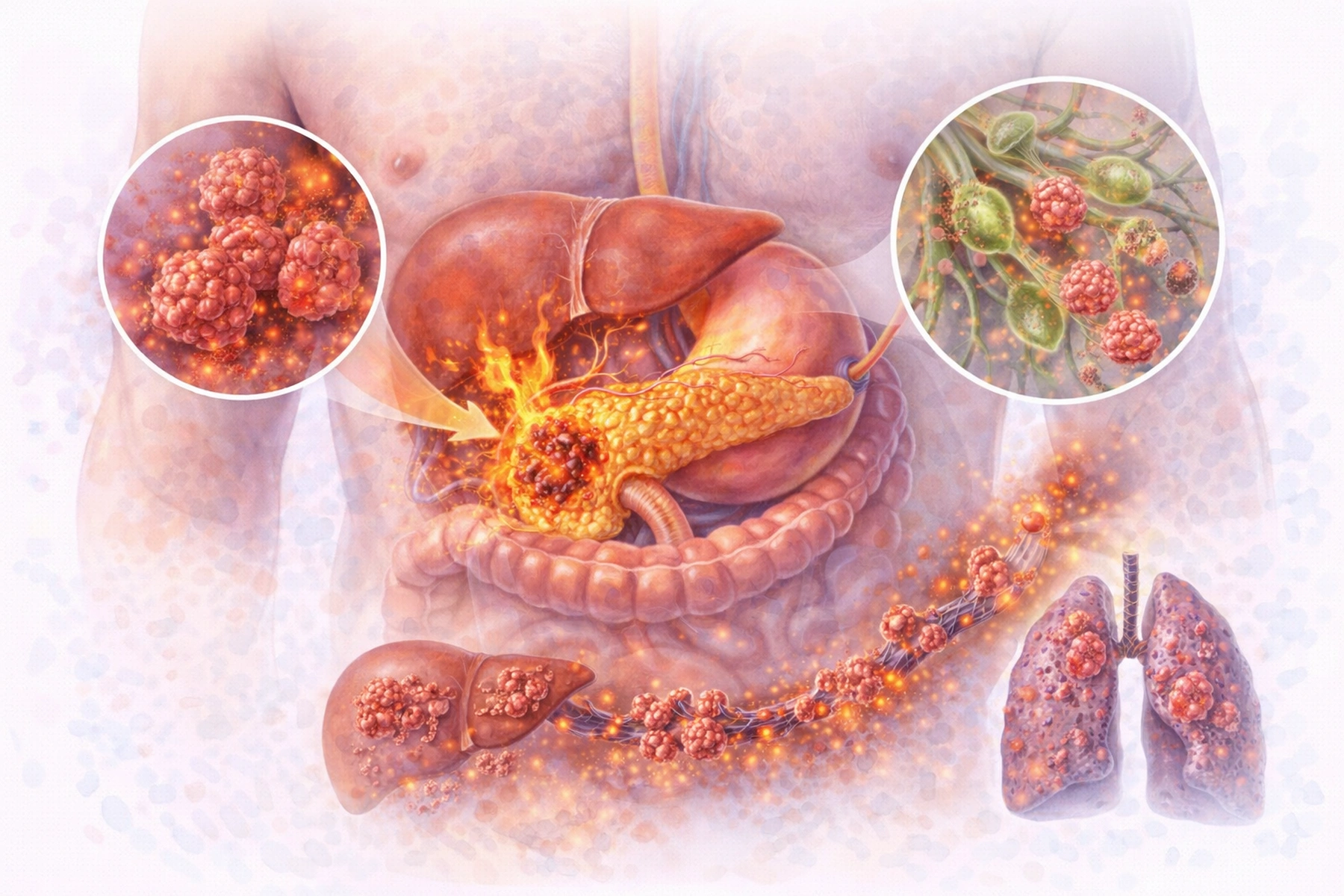
Pancreatic cancer is a malignant disease originating from the pancreas, most often from the exocrine cells lining the pancreatic ducts (called pancreatic ductal adenocarcinoma – PDAC).
Main characteristics:
- It grows aggressively and often silently.
- Symptoms appear late (jaundice, abdominal pain, weight loss).
- It has one of the lowest survival rates because it tends to metastasize early.
- In other words, a very bad guy
Biologically, pancreatic cancer usually develops through:
- Chronic inflammation
- DNA mutations
- Dysplasia
- Invasive carcinoma
Causes and main risk factors
Unfortunately, in this case there is no single specific cause. Pancreatic cancer is influenced by genetic causes, lifestyle, and environmental factors.
1. Medical and genetic causes
- Family history
- BRCA1/BRCA2 mutations
- Chronic pancreatitis
- Type 2 diabetes
- Certain inherited syndromes (Lynch, Peutz-Jeghers)
2. Lifestyle
These are the main factors over which we have control:
- Smoking (the biggest lifestyle-related risk)
- Obesity
- Heavy alcohol use
- Diets high in processed red meat
- Low fruit/vegetable intake
- Sedentary lifestyle
Why and how does meat consumption affect pancreatic cancer?
Pancreatic cancer is not as strongly linked to meat as colon cancer, but red and processed meats show consistent “suggestive/limited but positive” associations in WHO (World Health Organization) reports and large meta-analyses. Since we are evil opponents of meat, now we will point at it and show why and how it participates in the overall picture.
The mechanisms overlap with those involved in stomach and colorectal cancer, but they are specific to oxidative stress, nitrosamines, and inflammation affecting the pancreas.
Mechanism 1
Nitrosamines from processed meat reach the pancreas
Processed meats contain:
- Nitrites
- Nitrates
- Nitrosamine precursors (Nitrosamines, or more formally N-nitrosamines, are organic compounds produced through industrial processes. The chemical structure is R2N−N=O, where R is usually an alkyl group. Nitrosamines have a nitroso group (NO+), which is a “probable human carcinogen,” bound to a deprotonated amine.
They can form nitrosamines, which:
- Survive digestion
- Circulate in the bloodstream
- Reach the pancreas
- Cause DNA damage in pancreatic duct cells
Nitrosamines are known to induce pancreatic tumors in animal models, which supports biological plausibility.

Mechanism 2
High-temperature cooking (HCAs and PAHs) affects pancreatic tissue
Grilling, roasting, and smoking produce:
- HCAs (heterocyclic amines) – carcinogenic compounds formed when meat, poultry, or fish are cooked at high temperatures, such as grilling, broiling, or pan-frying. They are produced through reactions between amino acids, creatine, and sugars. High levels are associated with cancer risk in humans because they form DNA adducts.
- PAHs (polycyclic aromatic hydrocarbons) are a group of more than 100 different chemicals formed during the incomplete burning of coal, oil, gas, wood, garbage, and tobacco. They are considered carcinogenic, mutagenic, and lipophilic, posing serious health risks including cancer, cardiovascular problems, and developmental complications.
These compounds can:
- Enter the bloodstream
- Reach the pancreas
- Form DNA adducts (mutations)
- Promote chronic inflammation
Diets high in HCAs show pancreatic tumor formation in multiple mechanistic studies.
Mechanism 3
Oxidative stress caused by heme iron
Heme iron in red meat:
- Promotes the formation of reactive oxygen species
- Causes oxidative damage to pancreatic cells
- Increases inflammatory signaling
- Makes DNA more vulnerable to carcinogenic damage
Oxidative stress is a major pathway in pancreatic carcinogenesis.
Mechanism 4
Hyperinsulinemia and IGF-1 signaling
High meat intake — especially processed red meat — is associated with:
- Higher insulin levels
- Elevated IGF-1 (insulin-like growth factor) levels
Both promote:
- Faster cell proliferation
- Lower apoptosis
- Greater risk of mutations in pancreatic duct cells
This is especially important in people with prediabetes or type 2 diabetes, who already have elevated insulin.
Ideas for prevention and risk reduction
A) Reduce processed meat (the strongest step that can be taken, not only because we like it that way)
Since processed meat is most strongly linked through nitrosamines, reducing or eliminating it is beneficial.
B) Limit red meat, especially fried/grilled meat
Aim for:
- Less than 350–500 g/week
- Prefer low-heat cooking (stewing, boiling, baking)
Avoid:
- Blackened crust
- Burnt grill marks
- Smoked meats
C) Maintain healthy body weight and insulin sensitivity
Pancreatic cancer is closely linked to:
- Obesity
- High insulin levels
- Type 2 diabetes
Helpful strategies:
- Regular exercise – train to live, live to train
- Weight control
- Low-GI diets – glycemic index (more whole grains, legumes, vegetables)
- Less saturated fat and processed foods
D) Increase fruit and vegetable intake
Especially protective foods:
- Citrus fruits
- Leafy greens
- Tomatoes
- Berries
- Cruciferous vegetables
They reduce oxidative stress, inflammation, and nitrosamine formation.
E) Avoid smoking (very important) – apart from meat, we are now nagging you about cigarettes too – terrible business.
Smoking is one of the strongest risk factors for pancreatic cancer.
F) Limit alcohol and go to a monastery
Excessive alcohol use increases chronic pancreatitis, a major risk for pancreatic cancer.
G) Control blood sugar and diabetes
- Control glucose
- Monitor insulin resistance
- Early treatment of diabetes reduces chronic inflammation affecting the pancreas
H) Reduce sexual intercourse – we are joking, checking whether you are still reading the article
Brief summary of what was written in the article:
What it is:
Pancreatic cancer is an aggressive malignant disease of the pancreatic ducts, usually detected late and influenced by inflammation, DNA damage, and metabolic stress.
How meat contributes:
Processed and red meats introduce nitrosamines, heme iron, and carcinogens from high-temperature cooking, which can reach the pancreas through the bloodstream. These compounds cause DNA damage, oxidative stress, chronic inflammation, and increased growth signals that promote tumor development.
How to prevent it:
Reduce processed meat, limit red meat, avoid high-temperature cooking, maintain a healthy weight, control insulin levels, increase antioxidant-rich foods, avoid smoking, and limit alcohol.
Sources:
https://pubmed.ncbi.nlm.nih.gov/22240790
https://pubmed.ncbi.nlm.nih.gov/27693521