
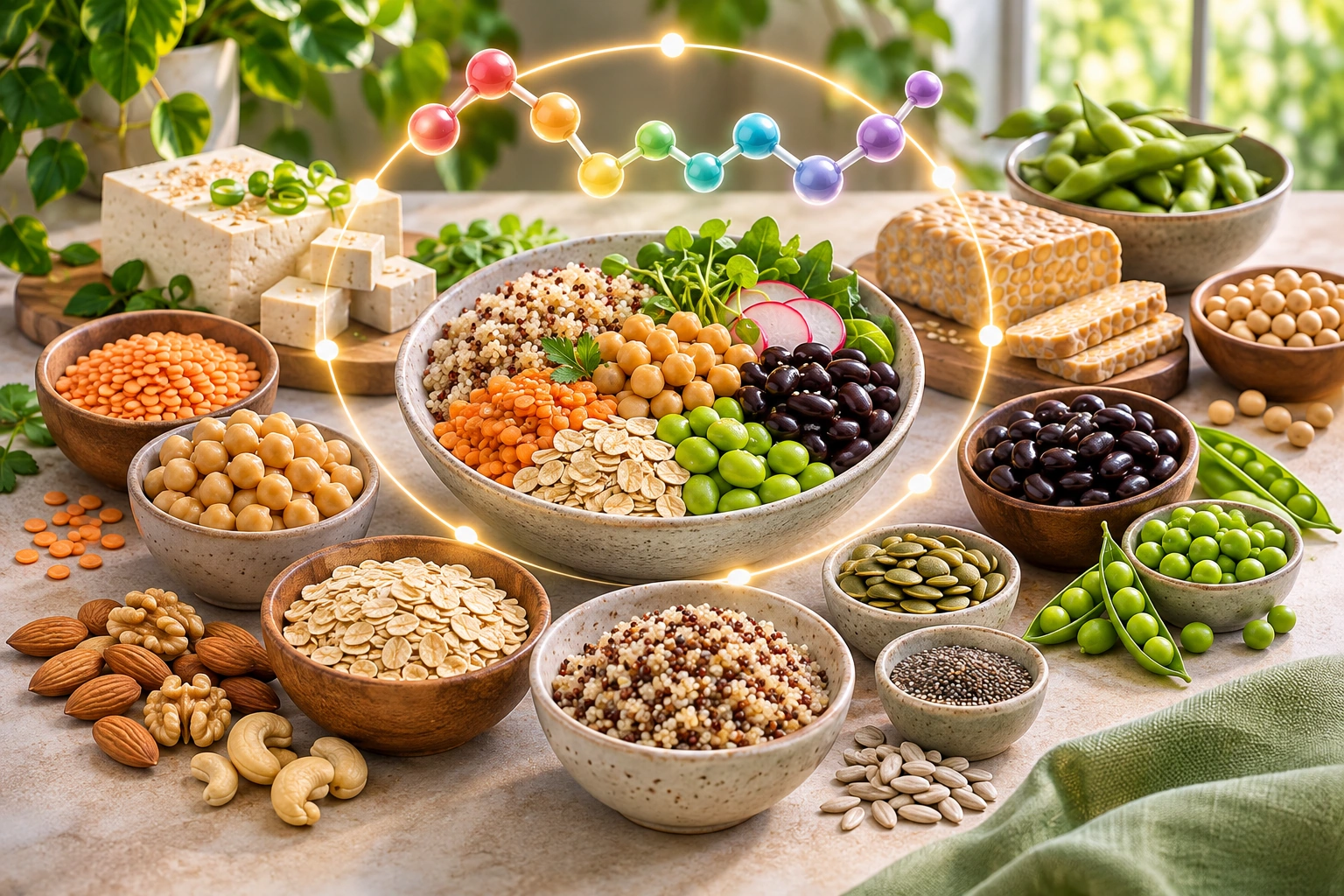
You may have already come across the claim that, compared with animal proteins, plant proteins are “incomplete.” Or that if you follow a fully plant-based diet, you need to carefully combine certain foods at every meal in order to obtain all amino acids.
But how true is this? Can we obtain all essential amino acids from plant foods alone? And do we really need to make complicated calculations at every meal to make sure we are getting enough of them?
To answer these questions, let us first look at what amino acids are and why they are so important for the body.
What are amino acids and why are they so important?
Amino acids are the building blocks of proteins. They are involved in numerous processes in the body — from building and repairing muscle tissue to the synthesis of enzymes, hormones, and neurotransmitters. They also play an important role in the normal functioning of the immune system and in maintaining the skin, hair, connective tissue, and organs.
The human body uses 20 main amino acids, 9 of which are essential:
• Histidine
• Leucine
• Isoleucine
• Methionine
• Threonine
• Valine
• Lysine
• Phenylalanine
• Tryptophan
They are called essential because our body cannot synthesize them on its own in sufficient amounts. Therefore, they must be obtained through food. The remaining 11 amino acids can usually be produced by the body.
Do plant sources contain all essential amino acids?
The short answer is — Yes, plant sources provide all nine essential amino acids. The difference between animal and plant sources lies in
the amounts and proportions in which these amino acids are present in a particular food.
Animal sources usually have a more balanced and concentrated amino acid profile, while plant sources generally contain lower
amounts of one amino acid or another.
For example, legumes — lentils, chickpeas, peas, kidney beans, and black beans — are generally rich in lysine but contain relatively less methionine. Grains such as oats, rice, and wheat show the opposite pattern, with a lower lysine content.
This does not automatically make these foods “low-quality” or “incomplete.” Each food group simply has its own characteristics that are useful to understand when planning our diet.
Among plant sources, soy has one of the best amino acid profiles and protein quality, making it one of the best sources of complete plant protein.
If we take the characteristics of plant foods described above into account, it is easy to understand where the popular idea comes from that legumes and grains need to be combined in order to complement their amino acid profiles.
But does this mean that we need to combine different plant proteins at every meal?
Do we need to combine plant proteins at every meal?
The short answer is — No.
Until recently, combining plant protein sources at every meal was considered necessary in order to provide all essential
amino acids. Today, we know that this is not necessary.
Our body has what is known as an amino acid pool — a supply of free amino acids that is constantly replenished through food intake, synthesis by the liver, or the breakdown of old and unnecessary cellular structures. Within this amino acid pool, amino acids are combined and used for the synthesis of new proteins and various physiological processes. Therefore, each individual meal does not need to provide the perfect ratio of all essential amino acids. What matters is having a varied and well-balanced diet throughout the day.
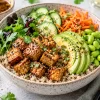
For example, we can start the day with oatmeal with a serving of protein, fruit, and nuts, have red lentils with vegetables for lunch, and prepare tofu with rice for dinner. Each of these meals does not need to contain the ideal combination of all amino acids on its own. What is more important is to include a variety of plant protein sources and consume enough total protein throughout the day.
When does combining different plant sources matter?
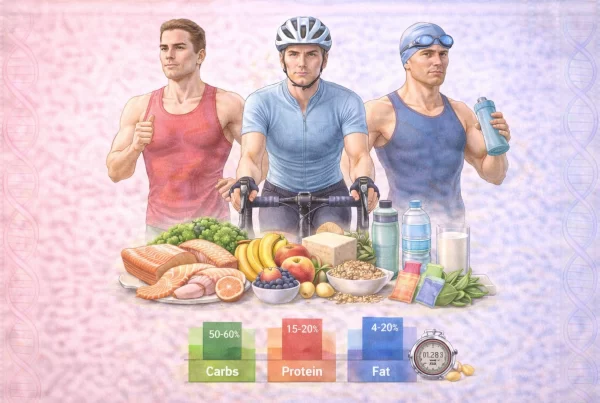
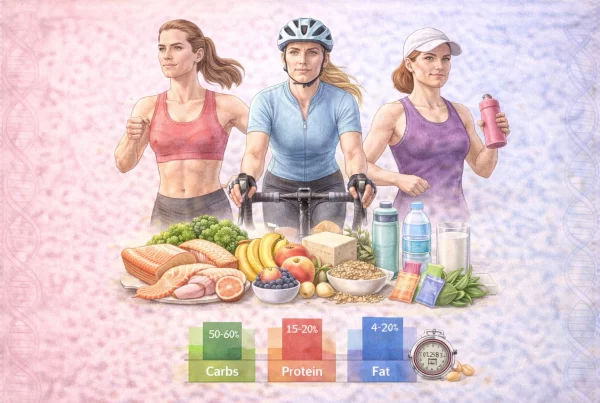
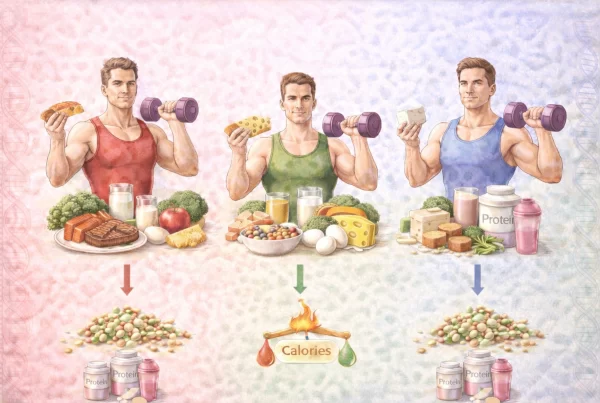
If we are physically active, especially when doing strength or high-intensity training, it makes sense to pay a little more attention not only to total protein intake but also to its amino acid profile.
With physical activity, our protein needs increase because the body must not only maintain its normal functions but also repair and adapt muscle tissue in response to the training stimulus.
For most healthy adults, the minimum recommended daily intake is around 0.8 g of protein per kilogram of body weight. For physically active people, protein needs are higher and usually range between 1.4 and 2.0 g/kg per day depending on training volume, goals, energy intake, and individual characteristics such as sex, age, height, and so on.
When following a fully plant-based diet, it may be useful to aim toward the upper end of this range because some plant protein sources can have lower digestibility, meaning they may not be broken down and absorbed as efficiently by the digestive system. In this context, combining plant protein sources can be a useful strategy.
Even then, unless we are professional athletes, people pursuing specific performance goals, or in a calorie deficit, we generally should not need to worry excessively about amino acid intake.
Summary
After looking at the role of amino acids and the characteristics of plant proteins, we can conclude that a plant-based diet can provide all the essential amino acids we need. If we have an adequate energy intake, consume enough total protein throughout the day, and include a variety of plant protein sources — tofu, tempeh, other soy products, lentils, chickpeas, beans, peas, nuts, and seeds —
there is no need to burden ourselves with unnecessary calculations or analyze amino acids at every meal.
Author:
Maria Budinova
Sources
1. Melina, V., Craig, W., & Levin, S. (2016). Position of the Academy of Nutrition and Dietetics:
Vegetarian diets. Journal of the Academy of Nutrition and Dietetics, 116(12),
1970–1980. https://doi.org/10.1016/j.jand.2016.09.025
2. Marsh, K. A., Munn, E. A., & Baines, S. K. (2013). Protein and vegetarian diets. Medical
Journal of Australia, 199(4 Suppl), S7–S10. https://doi.org/10.5694/mja11.11492
Would you like a consultation related to the topic of this article, or do you need a complete nutrition plan? You can contact the author of the article for more information.