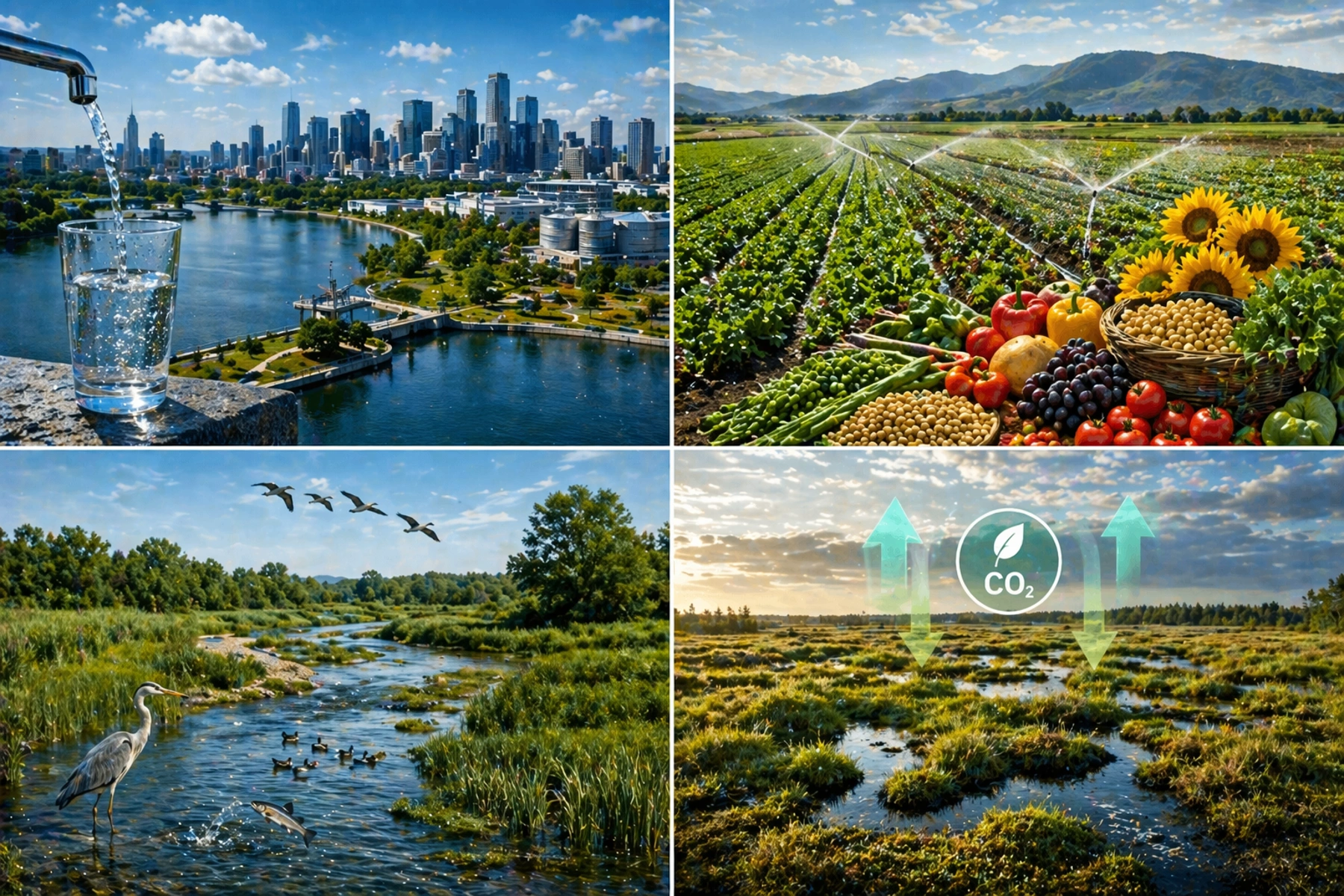
- Livestock uses a disproportionate amount of water
- Dietary change could free huge water resources
- Blue water is the most critical resource
- Freed water could support cities
- Plant foods use water more efficiently
- Water can be redirected toward food security
- Restoring rivers and wetlands is a key benefit
- Less livestock means less pollution
- Bulgaria also has significant saving potential
- The EU could free water volumes at scale
- The global effect would be enormous
- Water security also depends on food choices
Global food patterns are under scrutiny because of the disproportionate water demands of livestock systems. Livestock accounts for approximately 29% of global water consumption, even though it provides less than 20% of total calories. Shifting from meat-rich diets toward plant-based diets unlocks significant volumes of green, blue and grey water that can be used for activities beneficial to people and nature.
Water scarcity is rapidly emerging as one of the defining environmental limits of the 21st century. Half of the world’s population experiences severe water scarcity for at least one month each year. Agriculture is responsible for roughly 70% of global freshwater depletion, and livestock is one of the least efficient uses of the system per unit of nutritional value.
Major institutions, including FAO, the Water Footprint Network and UNEP, have repeatedly emphasized the critical role of reducing water demand and water use in livestock farming and in human activities more generally, with dietary change considered one of the most impactful leverage points.
In this article, we will examine how much water could be freed through reduced livestock production and how this water could be redistributed to maximize climate, ecosystem and food-system resilience.
Understanding water footprints, or in other words, what we use water for.
As we have explained in previous articles, agricultural products use three categories of water:
Green water – Rainwater stored in the soil
- Dominant in grazing systems
- Freed green water supports reforestation, rewilding and the restoration of soil moisture
Blue water – Irrigation from rivers, lakes and aquifers
- The scarcest and most politically sensitive type
- Freed blue water can be redirected toward drinking-water services, industry, irrigation of food crops and hydropower stability
Grey water – Water required to dilute pollutants to legal standards
- Freed grey water improves river quality, reduces eutrophication and restores wetlands
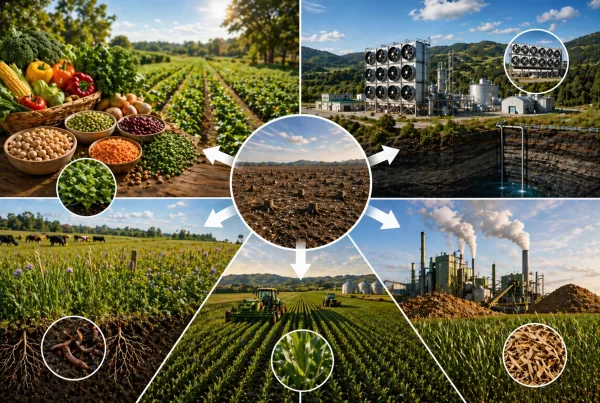
Redistribution pathways for freed water
The main purpose of this article is to show how the water currently used for livestock could be redistributed.
Pathway 1
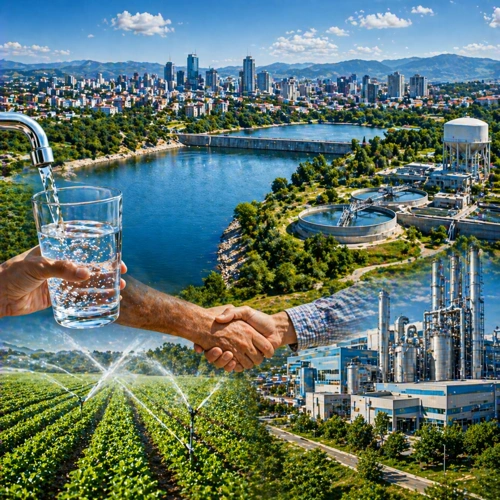
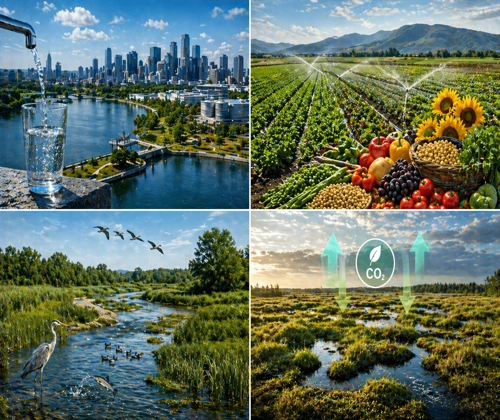
Urban and municipal water security
Freed blue water can:
- Increase household water security
- Reduce vulnerability to water stress
- Stabilize reservoir levels
- Support industrial sectors
- Reduce conflict over water between agriculture and cities
This is especially important for southern and southeastern Europe, including Bulgaria, Spain, Italy and Greece. Many of us are aware that towns in Bulgaria still face summer water restrictions, even though we live in the 21st century.

Pathway 2
Irrigation for high-value plant foods
Expanding plant proteins, combined with freed irrigation water, enables:
- Greater production of legumes, soy, sunflower, fruits and vegetables
- Higher nutrient-to-water ratios
- Greater domestic food security
This would be the clearest win for “food-system resilience”.
Pathway 3
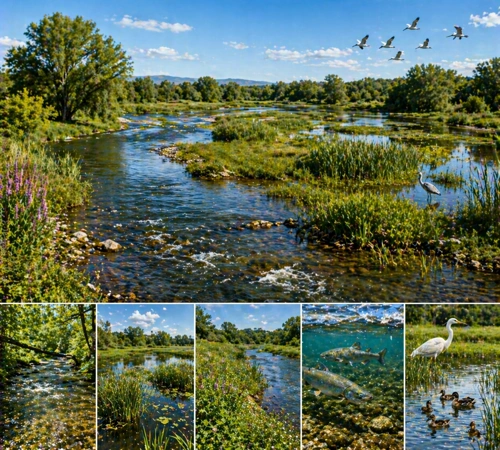
Restoring ecological flow
Freed water can be redistributed to replenish:
- River flows
- Wetlands
- Riparian ecosystems
- Fish migration corridors
- Bird habitats
This reduces biodiversity loss and helps restore degraded floodplains.
Pathway 4
Climate change mitigation through wetland restoration
Rewetting peatlands and wetlands:
- Can absorb 5–20 tonnes CO₂e/ha/year depending on the size of the restored areas
- Stops peat oxidation
- Increases natural carbon sequestration
- Improves drought and flood regulation
A new high-quality climate strategy.
Example scenarios
Scenario 1 — Bulgaria
Context
- Bulgaria has moderate agricultural water demand, but high summer vulnerability, especially in the southern regions, and not only there. Our pipes have simply become like Swiss cheese.
- Meat consumption is moderate, with beef consumption low; pork and poultry dominate.
- Bulgaria is affected by river pollution and grey-water pressure from nitrates, phosphates and manure.
Dietary change scenario (plausible):
- 30% reduction in pork
- 20% reduction in poultry
- 70% replacement with legumes + soy
- 30% replacement with grains/vegetables
Estimated water savings:
- Pork uses 6,000 liters of water to produce one kilogram of meat
- Poultry uses 4,300 liters of water to produce one kilogram of meat
→ Combined annual reduction ≈ 250–350 million m³ per year
(of which ~15–20% is blue water, ~25% grey water)
Optimal allocation for Bulgaria:
- Irrigation for vegetables and fruits
- Tomatoes, peppers, cucumbers, melons
- Requires only 5–10% of the freed water
- Reduction of grey water
- Reducing manure improves tributaries of the Danube, Maritsa and Tundzha
- Significant reduction in nitrogen/pesticide loads
- Wetland restoration
- Srebarna, along the Danube and smaller wetland systems
- Potential to assimilate 10–12 million tonnes CO₂e over a 30-year period
- Urban drought resilience
Sofia, Plovdiv and Stara Zagora could benefit from reservoir stability
Scenario 2 — European Union
Context
- Europe faces recurring drought years
- Livestock uses over 60% of agricultural water in the EU
- 40% of EU rivers are in poor ecological condition
- 80%+ of water is consumed by agriculture in Mediterranean countries
Dietary change scenario (moderate):
- 50% reduction in beef and lamb
- 40% reduction in pork
- 20% reduction in poultry
- Replacement mainly with legumes, soy, vegetables and grains
Estimated water savings across the EU:
- Approximately 25–35 km³ of freed water/year
- Blue-water savings: 7–10 km³
- Grey-water reduction: 5–7 km³ dilution equivalent
Optimal allocation for the EU:
- Replenishment of Mediterranean basins
- Spain, Italy, Greece
- Crucial for agriculture and hydropower
- Ecological river flows
- Danube, Po, Loire, Ebro, Rhine
- Major restoration potential
- Expansion of plant-protein agriculture
- The EU Protein Strategy 2030 is perfectly aligned with this
- Local soy and lentils reduce imports from Brazil/USA
- Flood management
- Freed water enables controlled flooding in wetlands
- Reduces flood damage in the Netherlands, Germany and France
Scenario 3 — Global
Context
- Livestock accounts for 29% of water consumption
- 52% of global blue-water consumption occurs in water-scarce regions
- Major hotspots: India, China, the Middle East, North Africa, the southwestern United States
Dietary change scenario (ambitious):
- 50% global reduction in red meat
- 40% reduction in dairy products
- Replacement with legumes, grains, nuts and vegetables
Estimated water savings:
- Global savings: 180–220 km³ per year
(equivalent to ~4 Lake Genevas or the annual discharge of the Nile)
Breakdown:
- Blue water: 40–50 km³
- Green water: 120–140 km³
- Grey water: 20–25 km³ dilution equivalent
Optimal global allocation:
- Drinking water and sanitation
- Enough freed blue water for 500–700 million people.
- Irrigation for food security
- Especially in India, Bangladesh and Sub-Saharan Africa.
- River restoration
- Ganges, Indus, Colorado, Murray-Darling, Yellow River.
- Wetland revival
- Huge CO₂ sequestration potential in Indonesia, the Congo Basin and Russia.
- Groundwater recharge