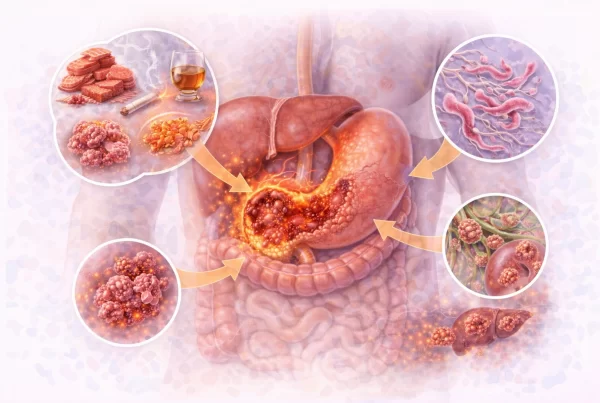

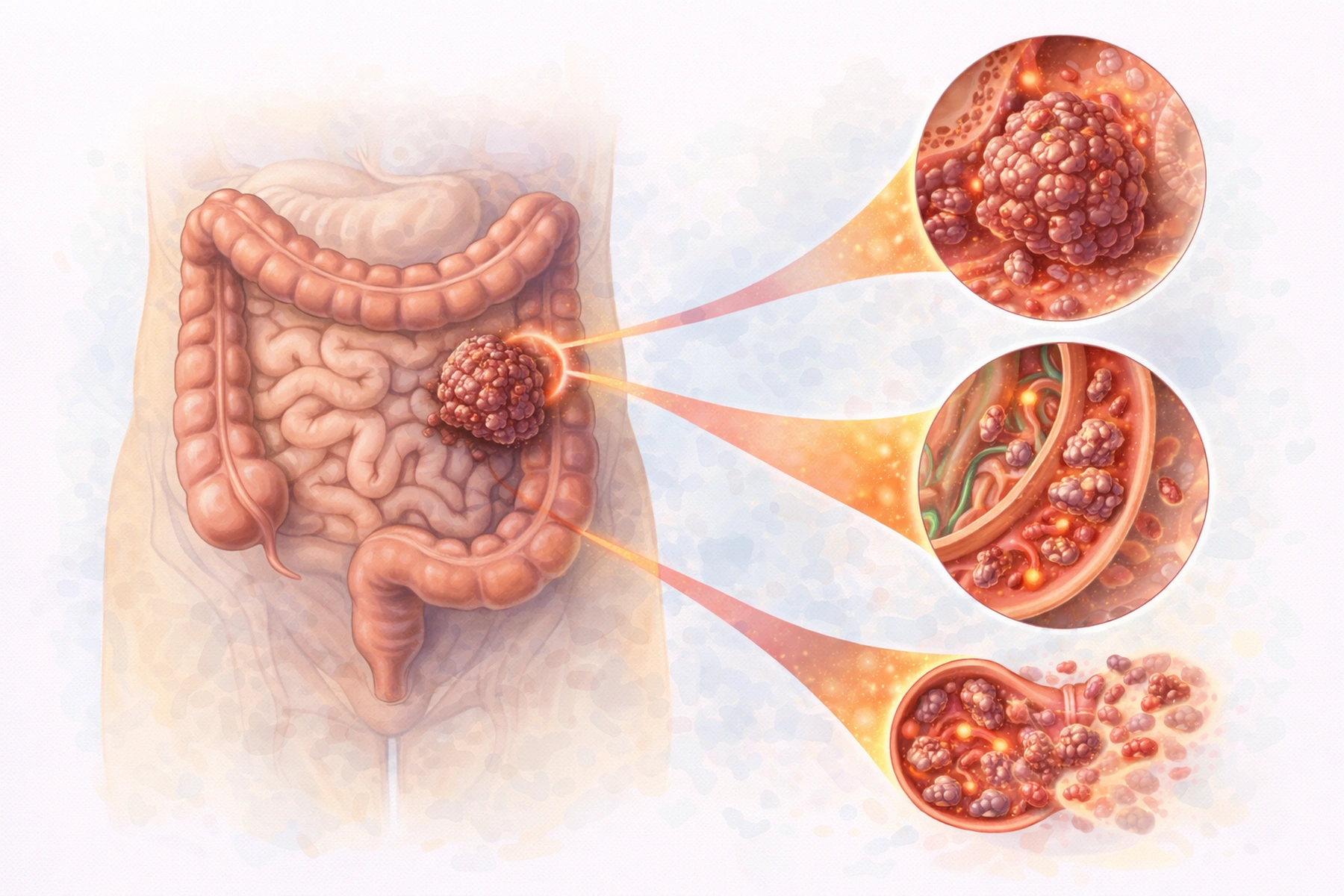
- Colorectal cancer is largely preventable
- Red and processed meat increase the risk
- Processed meat is the riskiest factor
- Heme iron and nitrosamines damage DNA
- High-temperature cooking creates carcinogens
- The microbiome and bile acids also play a role
- Low fiber intake increases the risk
- Limiting meat reduces the risk
- Fiber and whole plant foods protect
- Cruciferous vegetables and legumes are beneficial
- Movement and normal body weight matter
- Prevention starts with nutrition
Even if a person lives well, at some point they have to leave this world. There is probably no particularly pleasant way for this to happen, but there are many unpleasant ones, and cancer is certainly one of them. Unfortunately, there are many different types of cancer, and they develop as a result of different causes. In this article, we will look at colon cancer, or more scientifically, colorectal cancer. We will examine what it is, why and how it occurs, how nutrition affects it, and what we can do to reduce the chances of developing this disease.
What is colorectal cancer?
Colorectal cancer (CRC) is a malignant disease that begins in the colon, usually as small benign growths called polyps (adenomas).
Over the years, these polyps can accumulate genetic mutations and progress through the adenoma → carcinoma sequence.
Key biological characteristics:
It develops on the inner lining (epithelium) of the colon or rectum.
Mutations often involve APC, KRAS, p53, β-catenin, and mismatch repair genes.
- CRC is one of the most preventable types of cancer, since 80–90% arise from modifiable factors.
- APC is a gene that controls and restrains, or scientifically speaking suppresses, tumors by preventing excessive cell growth in the colon. When it mutates, early polyps form because growth signaling is no longer controlled.
- KRAS is a protein that controls growth and acts as a “switch.” When it mutates, it becomes stuck permanently ON, leading to rapid and uncontrolled cell division.
- p53 is the cell’s main DNA damage controller. When it mutates, damaged cells are no longer eliminated, allowing them to accumulate errors and progress toward cancer.
- β-catenin is a signaling protein that promotes cell growth and is normally controlled by APC. When overactivated, it triggers continuous growth signals that accelerate tumor development.
Two main molecular pathways:
- Chromosomal instability pathway (CIN) – the most common
- Microsatellite instability (MSI) – often linked to inflammation and mismatch repair defects
Since, at least to us, the two terms above sound quite scientific, we will explain them in more understandable words.
Chromosomal instability pathway (CIN)
The chromosomal instability pathway (CIN) is the most common pathway through which colorectal cancer develops. It involves large-scale genetic changes, such as the gain or loss of whole chromosomes, chromosomal fragments, or major structural rearrangements. These abnormalities disrupt key tumor-suppressor genes (such as APC and p53) and activate oncogenes (such as KRAS), allowing abnormal cells to survive and multiply. CIN-driven tumors usually follow the classic adenoma → carcinoma progression.
Microsatellite instability (MSI)
Microsatellite instability (MSI) is caused by defects in the DNA mismatch repair system, which normally fixes copying errors during cell division. When this system fails, short repetitive DNA sequences (microsatellites) become unstable, leading to a large number of mutations in the genome. MSI tumors tend to have a high mutational burden, strong immune activation, and different biological behavior compared with CIN tumors. This pathway is linked to certain genetic conditions (such as Lynch syndrome), but it also occurs sporadically.
Growth is strongly influenced by diet, inflammation, the gut microbiome, and lifestyle.
Colon cancer is one of the most preventable types of cancer, since 80–90% arise from modifiable factors.
Why do we develop this type of cancer and what are the most common causes?
Causes and risk factors (general)
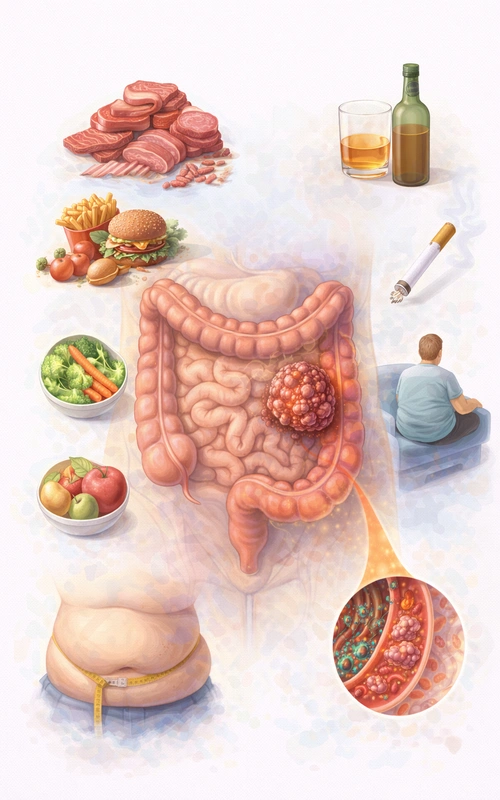
The development of colorectal cancer is multifactorial. The strongest factors, apart from genetics, include:
Diet- and lifestyle-related risks
- Consumption of processed meat
- Excessive consumption of red meat
- Low fiber intake
- Low fruit/vegetable intake
- Chronic inflammation
- Alcohol — who would have told you that evening rakia was not healthy
- Smoking
- Sedentary lifestyle
- Obesity, visceral fat, insulin resistance
Medical risks
- Long-standing inflammatory bowel disease (Crohn’s disease, ulcerative colitis)
- Type 2 diabetes
- Certain inherited syndromes (FAP, Lynch syndrome)
How does meat consumption affect colorectal cancer risk?
The World Health Organization’s cancer agency (IARC) classifies:
- Processed meat → Group 1 carcinogen (causes colorectal cancer)
- Red meat → Group 2A (probably carcinogenic to humans)
The risk comes from four main mechanisms.
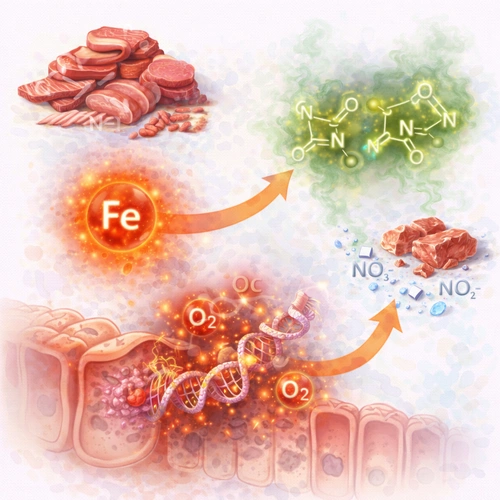
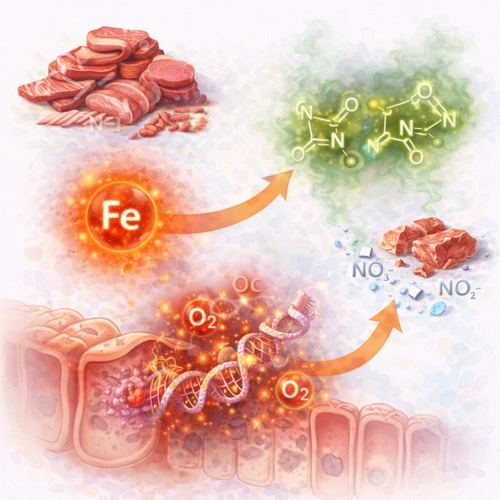
Mechanism 1
Heme iron → Reactive N-nitroso compounds (NOCs)
Red meat contains heme iron, which:
- Promotes the endogenous formation of N-nitroso compounds, many of which are carcinogenic.
- Triggers oxidative stress and epithelial DNA damage in colon cells.
- Increases the conversion of nitrates/nitrites in processed meats into nitrosamines.
This mechanism is frequently observed in both human and animal data.
Mechanism 2
Chemicals in processed meat: nitrites, nitrates, nitrosamines
Processed meats (bacon, sausages, ham, salami) contain:
- Nitrites/nitrates → nitrosamines (carcinogenic)
- Polycyclic aromatic hydrocarbons (PAHs)
- Heterocyclic amines (HCAs) from smoking, curing, frying, grilling
They directly damage the epithelial DNA of the colon and promote tumor formation.
Mechanism 3
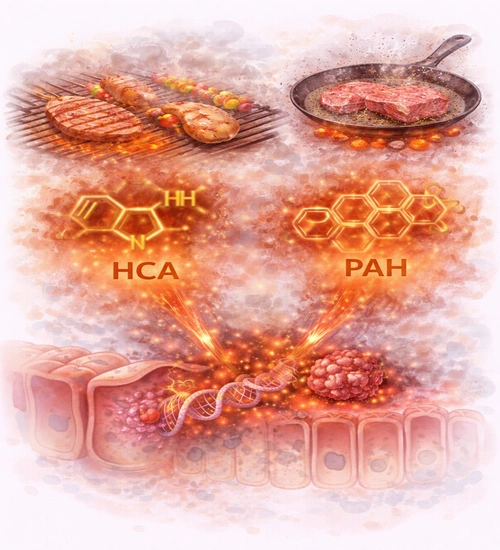
High-temperature cooking produces HCAs and PAHs
Frying, grilling, roasting, and barbecue create:
- HCAs (heterocyclic amines)
- PAHs (polycyclic aromatic hydrocarbons)
Both are known carcinogens.
Why is the colon especially vulnerable?
These compounds interact with gut bacteria and are converted into mutagenic metabolites, thereby chronically irritating colon tissue.
Mechanism 4
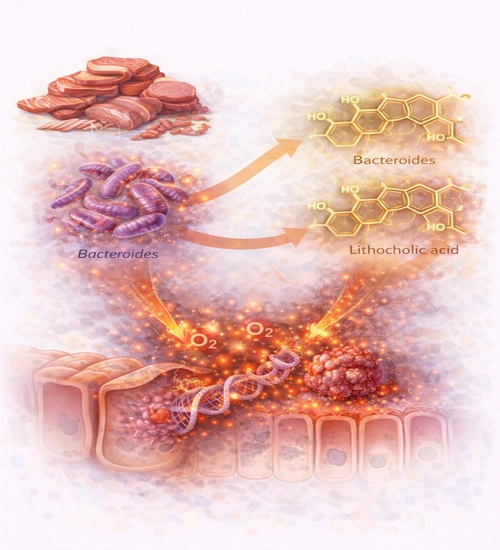
Microbiome imbalance + bile acids
Red and processed meat affect the microbiome:
- Increase Bacteroides species associated with inflammation
- Increase toxic secondary bile acids (deoxycholic acid, lithocholic acid), which:
- Damage DNA
- Stimulate oxidative stress
- Trigger inflammation
Inflammation accelerates the transformation of adenoma into carcinoma.
How high is the risk?
(Epidemiological summary)
Processed meat
- Every 50 g/day (for example, 2 slices of bacon) increases colorectal cancer risk by ~18%.
Red meat
- Every 100 g/day increases colorectal cancer risk by ~12%.
These are relative increases, but they are highly reproducible in studies involving large numbers of people.
What can be done to prevent or slow it down?
After scaring you with how frightening colon cancer is (actually, it really is), we also offer ideas to help you sleep more peacefully. Provided you follow them, of course.
A) Reduce processed meat intake (the most important step)
– Ideally, avoid cured/processed meats entirely.
– Even small regular amounts increase risk.
B) Reduce total red meat intake
The evidence suggests:
- Keep it below 350–500 g/week cooked weight (~2–3 meals).
- Cancer societies recommend “as little as possible.”
C) Use safer cooking methods
Avoid:
- Charred crust
- Black grill marks
- High-temperature frying
Better:
- Stewing
- Baking
- Boiling
- Grilling at a lower temperature
These reduce HCA/PAH by 60–90%.
D) Increase fiber intake
Fiber:
- Dilutes carcinogens
- Reduces the transit and processing time of food
- Supports a healthy microbiota that produces butyrate, a tumor-suppressing molecule
- Reduces inflammation
The goal is 30–40 g/day.
E) Eat protective foods
Some foods counteract the mechanisms above:
- Cruciferous vegetables (broccoli, kale, cauliflower → sulforaphane)
- Garlic and onion (organosulfur compounds)
- Berries (anthocyanins)
- Legumes (fiber + anti-inflammatory compounds)
- Whole grains
F) Maintain a healthy body weight and exercise
Physical activity:
- Reduces insulin resistance
- Reduces inflammation
- Helps regulate intestinal motility
Regular exercise (150–300 min/week) can reduce colorectal cancer risk by 20–30%.
G) Limit alcohol
Alcohol synergizes with red/processed meat to increase colon cancer risk. And we are trying to stop you from that, we are not ashamed…